Beyond Kyoto: Why American Travelers Are Making a Quiet Pilgrimage to Nagasaki's Sacred Mountain
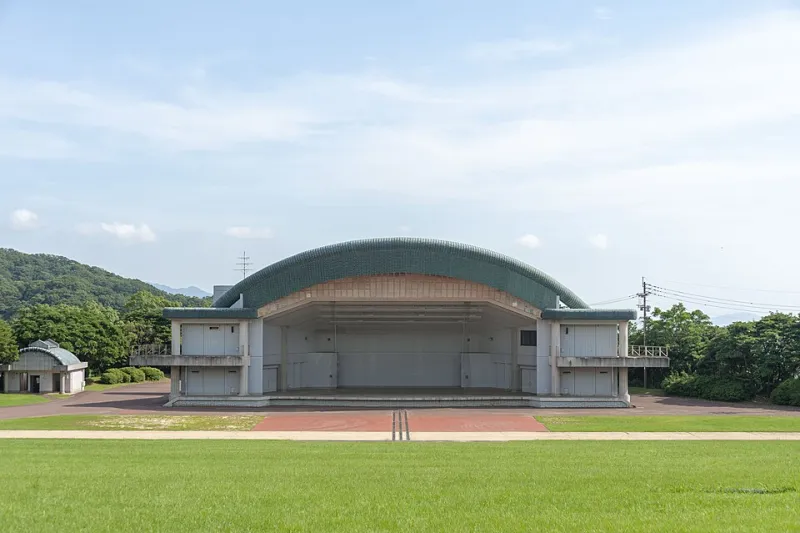
Photo: Marine-Blue, CC BY-SA 4.0, via Wikimedia Commons
The Mountain That Doesn't Shout
There's a moment, somewhere between the ropeway station and the first cedar-lined trail, when Inasayama stops feeling like a tourist destination and starts feeling like something else entirely. The city noise drops away. The harbor below turns into a silver mirror. And you realize — almost by accident — that you've stumbled onto one of Japan's most quietly powerful places.
For most international visitors, the Japanese pilgrimage trail begins and ends with Kyoto. And honestly, who can blame them? Kyoto is extraordinary. But ask anyone who's spent a sweaty August afternoon shoulder-to-shoulder at Fushimi Inari and you'll hear a familiar refrain: there has to be another way.
Inasayama, rising 333 meters above Nagasaki's western harbor, is increasingly that other way — and American travelers are starting to catch on.
From Sacred Ground to Spiritual Tourism Hotspot
The mountain's spiritual history runs deep. Buddhist monks established a presence here centuries ago, drawn by the peak's commanding views and its sense of natural isolation from the city below. The site became associated with protective deities, and for generations, local families would make the climb as an act of devotion — not recreation.
That tradition never entirely disappeared. What changed is who's making the journey now.
"We see more foreign visitors every year, and many of them arrive with a genuine curiosity about the spiritual dimension of this place," says Reverend Takahashi Kenji, a monk at one of the mountain's smaller temples who has watched the shift unfold over the past decade. "They are not just here for the view. They want to understand what the mountain means."
That curiosity has created a kind of informal cultural exchange. Local monks and wellness practitioners have begun offering guided meditation sessions, some conducted entirely in English, that draw on the mountain's Buddhist heritage while making the experience accessible to visitors who may have never set foot in a temple before.
What You Actually Do Up There
Let's talk logistics, because this matters for American travelers who are used to planning everything down to the last detail — and then need to be told to stop planning.
The ropeway from the base is the easy route, and there's zero shame in taking it. The ride alone offers sweeping views of Nagasaki's layered hillside neighborhoods tumbling toward the water. But the trails are where the mountain reveals itself. Several marked walking paths wind through the forested slopes, ranging from leisurely strolls to moderately challenging hikes that reward you with sudden clearings and stone lanterns half-swallowed by moss.
The summit observation deck is justifiably famous — Nagasaki's nighttime cityscape is frequently cited among Japan's top three most beautiful night views, right alongside Sapporo and Kobe. But the daytime panorama has its own kind of magic. On a clear morning, you can see across the harbor to the Nishisonogi Peninsula, and the city below looks almost impossibly compact and human-scaled.
For travelers specifically seeking a wellness-oriented experience, the mountain's meditation circuits are the real draw. Several trails incorporate designated rest points where visitors are encouraged to sit, breathe, and engage in a practice the locals describe loosely as shizen no naka de kangaeru — thinking within nature. It's less formal than structured Zen meditation and more approachable for first-timers.
The Anti-Overtourism Alternative
Here's the thing nobody really says out loud but everyone is thinking: Japan's most famous destinations are struggling under the weight of their own popularity. Overtourism has become a genuine crisis in places like Kyoto, Osaka, and Tokyo's most iconic neighborhoods. Residents are frustrated. The experience for visitors has degraded. And the cultural institutions that made these places worth visiting in the first place are under pressure.
Inasayama doesn't have that problem. Yet.
"The people who come here tend to be the kind of travelers who are already looking for something different," says Matsumoto Yuki, a Nagasaki-based wellness consultant who works with international visitors. "They've done the big cities. They want depth. They want quiet. And Inasayama gives them that."
For American travelers in particular — many of whom are arriving in Japan with longer itineraries and more intentional travel goals than the classic two-week sprint — the mountain offers something genuinely rare: a world-class experience without the crowd anxiety.
Getting Here from the US Side of Things
Nagasaki isn't a direct flight from most American cities, but it's more accessible than it used to be. Most travelers connect through Tokyo, Osaka, or Fukuoka, with Fukuoka offering the shortest onward journey via Shinkansen or highway bus. Budget a full day for travel if you're coming from the East Coast.
Once in Nagasaki, Inasayama is easily reachable by tram and a short bus ride to the ropeway base station. The city itself rewards a multi-day stay — Nagasaki's history as Japan's primary gateway to the outside world for centuries has left it with a cultural texture unlike anywhere else in the country, and the Peace Memorial sites carry a particular weight for American visitors that deserves unhurried attention.
What the Mountain Asks of You
Reverend Takahashi, when asked what he hopes visitors take away from the mountain, pauses for a long moment before answering.
"Just to be still for a little while," he says. "In Japan, we have a concept — ma — which is about the meaning found in empty space, in pause, in silence. The mountain teaches this. You don't need to be Buddhist to feel it."
That might be the best description of what Inasayama offers the modern traveler: not a performance of spirituality, not a curated wellness retreat with a gift shop at the end, but an invitation to slow down on a forested hillside above a harbor city that has seen more history than most places on earth.
The light up here, especially in the late afternoon when it catches the harbor and turns everything amber and gold, feels like the mountain's own way of saying welcome.
You just have to show up.