Empty on Purpose: Why the World's Most Creative Minds Are Escaping to Nagasaki's Forgotten Corners
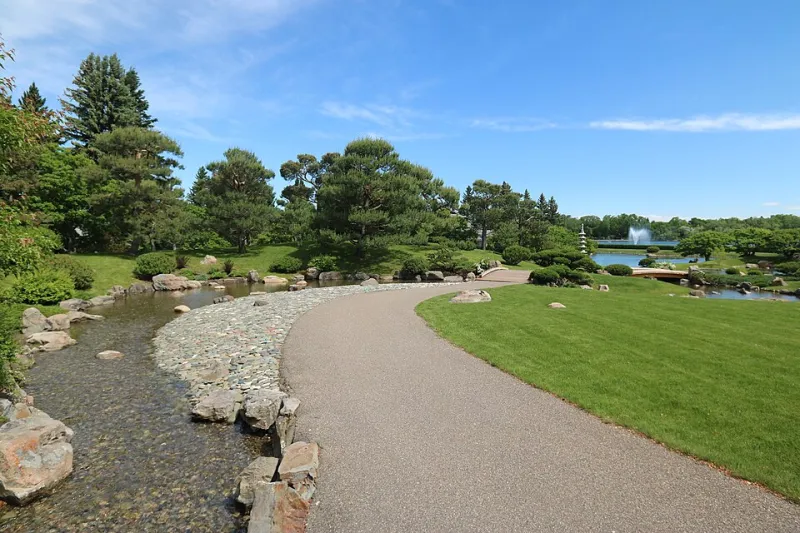
Photo: Thank you for visiting my page from Canada, CC BY 2.0, via Wikimedia Commons
There's a moment, somewhere between the third espresso and the fourteenth browser tab, when a creative person realizes they've stopped creating. The ideas aren't gone — they're just buried under noise. That's the moment a growing number of American artists, novelists, graphic designers, and filmmakers have started reaching for the same unlikely solution: a one-way ticket to Nagasaki.
Not Kyoto. Not Tokyo. Nagasaki.
The city has long carried a reputation for luminous spectacle — the lantern festivals, the mountain views, the harbor that seems to hold light differently than anywhere else on Earth. But there's a quieter story unfolding here, one that doesn't make it onto the highlight reels. Tucked between Nagasaki's famous glow and its storied port history are pockets of near-total stillness that have become some of the most coveted creative sanctuaries in Asia.
The Counterbalance Nobody Talks About
When you spend time in Nagasaki, you start to notice something intentional about the way the city breathes. For every illuminated hill and bustling waterfront, there's a forgotten alley that seems to exist outside of time. A moss-covered stone wall. A garden that nobody appears to own. A neighborhood where the only sound is wind moving through paper screens.
This isn't accidental. Nagasaki has, over centuries, developed a kind of cultural muscle memory around contrast. A city that has known profound darkness — and profound beauty — tends to understand the value of both. The silence here isn't emptiness. It's architecture.
That's the phrase a Brooklyn-based illustrator named Dana used when she described her first week at a residency near the Inasayama foothills. "I kept waiting for the silence to feel awkward," she told us over email. "It never did. It felt like the city had built the quiet on purpose, the same way you'd build a room."
Abandoned Temples and the Art of Productive Stillness
Some of the most talked-about creative escapes in the Nagasaki area aren't formal retreat centers at all. They're semi-abandoned Buddhist temples scattered across the mountain neighborhoods — structures that still stand, still breathe, still hold the geometry of devotion, but see few visitors on any given weekday morning.
For a writer or visual artist, spending a few hours in one of these spaces is a different kind of experience than touring a famous shrine. There are no tour groups. No audio guides. No gift shop. Just worn wooden floors, the smell of old incense, and light that falls through latticed windows in ways that feel almost editorial.
Several local cultural organizations have begun quietly facilitating access to these spaces for visiting creatives — not as formal programming, but as something closer to an informal introduction. You show up. You sit. You work, or you don't. The temple doesn't care either way.
The Gardens That Don't Advertise Themselves
Nagasaki's well-known gardens are beautiful and worth your time. But the hidden ones — the small, private, semi-public green spaces tucked into residential neighborhoods near the Inasayama slopes — are something else entirely.
These are gardens that weren't designed for tourism. They were designed for living. Small stone paths that lead nowhere in particular. Bamboo that's been growing in the same corner for fifty years. A single persimmon tree dropping fruit that nobody seems to be collecting.
For designers and photographers especially, these spaces have become almost mythological. Word passes through creative networks — a Slack channel here, a group chat there — and suddenly a landscape architect from Portland or a textile artist from Savannah is booking a flight to spend a week wandering neighborhoods that don't appear in any travel guide.
"The gardens I found in Nagasaki changed the way I think about negative space," said one graphic designer who asked to remain anonymous, protective of what she half-jokingly called her "secret spot." "I came back and redesigned three client projects from scratch. Everything I'd been doing felt cluttered."
Why Nagasaki, and Why Now
There's a practical answer and a philosophical one.
The practical answer: Nagasaki is genuinely less crowded than Japan's headline destinations. You can move through it without the logistical overhead that comes with navigating peak-season Kyoto or Tokyo's tourist infrastructure. Accommodation is more affordable. The locals are accustomed to outsiders — the city has been a port of international exchange for centuries — without being overwhelmed by them.
The philosophical answer is harder to articulate but more important. Nagasaki carries weight. It's a city that has processed enormous historical experience and somehow emerged with a particular kind of grace. That gravity isn't oppressive — it's grounding. Creatives who come here often describe feeling more present, more honest in their work, less interested in performing creativity and more interested in actually doing it.
There's also the Inasayama effect. The mountain that watches over the city has a way of reorienting your sense of scale. Standing at its base or looking up at it from a quiet neighborhood below, you get a reminder that your creative block, your deadline anxiety, your industry noise — all of it is very small. The mountain was here before the city. It'll be here after.
How to Find the Quiet (Without Ruining It)
This is the part where we'd normally give you a listicle of coordinates and Google Maps pins. We're deliberately not going to do that.
Part of what makes Nagasaki's quiet spaces valuable is that they require a little effort to find. The best approach is to arrive without a packed itinerary, pick a neighborhood near the mountain's lower slopes, and walk slowly. Talk to people at small coffee shops and craft studios. Ask what's nearby. Accept that you might not find anything remarkable on the first day — and that the first day of not finding anything remarkable is itself part of the experience.
If you want a more structured entry point, a handful of local cultural organizations and guesthouses have begun offering what they loosely call "slow residencies" — informal week-long arrangements that include a place to sleep, access to working space, and introductions to the kinds of corners the city keeps for itself. These aren't luxury retreats with programming and wellness menus. They're closer to a guest room in a thoughtful household.
The Light in the Absence
Inasayama Hikari — the light of Inasayama — isn't only about the lanterns and the festival glow. It's also about what happens when you remove all the light and let your eyes adjust. Nagasaki's quiet spaces are, in their own way, an expression of the same instinct: that illumination is most powerful when it has darkness to work against.
The creatives who keep returning to this city aren't running away from their work. They're running toward a version of themselves that can actually do it. And they keep finding that version somewhere between a mossy temple gate and a garden that doesn't advertise itself — in the silence that Nagasaki has, very deliberately, kept.