Mountain Medicine: Inside the Quiet Wellness Revolution Happening on Nagasaki's Sacred Slopes
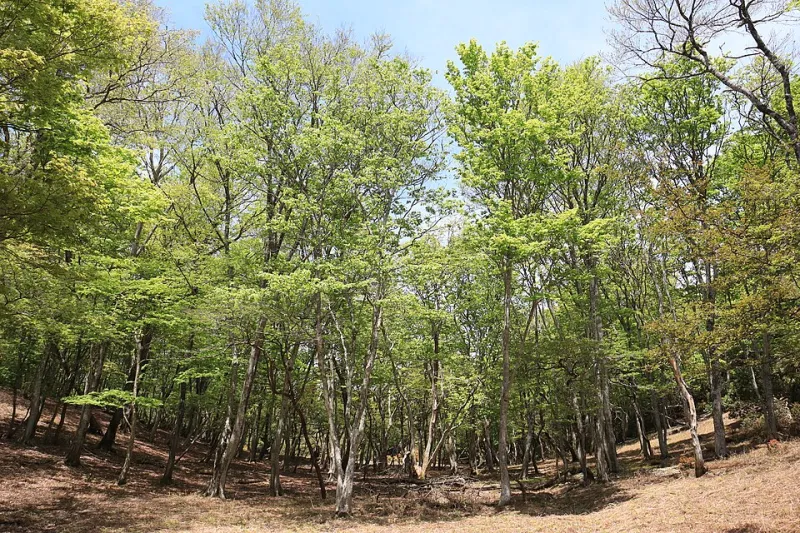
Photo: Alpsdake, CC0, via Wikimedia Commons
Let's be honest about the state of wellness tourism for a second. A lot of it has started to feel like a luxury product wearing spiritual clothing — cold plunges with branded towels, "mindfulness" sessions that last twenty minutes before the smoothie bar opens. Americans who've invested real time and money in that world are quietly starting to ask whether there's something more substantive out there.
The answer, it turns out, might be in the mountains above Nagasaki.
A Different Kind of Sacred Ground
Inasayama isn't famous the way Kyoto's Arashiyama is famous. There's no bamboo grove that's been photographed a billion times. The mountain doesn't trend on travel apps. What it has instead is something harder to quantify: a genuine layering of spiritual history, natural forest, and local practice that hasn't been flattened into a tourist product.
The mountain has been considered sacred ground for centuries, home to shrines and small temples that served the communities below. Buddhist monks made retreats here. Fishermen's families climbed to pray for safe returns. The spiritual geography of Inasayama is quiet and cumulative — less about dramatic landmarks and more about the accumulated weight of all the people who've come here to ask for something, or to let something go.
That history is part of what makes the wellness scene developing around the mountain feel different from the manufactured variety. The practitioners working up here aren't importing a concept from somewhere else. They're working within, and in conversation with, something that was already here.
Forest Bathing, Done Right
Shinrin-yoku — usually translated as "forest bathing" — has made significant inroads in the US wellness conversation over the past few years, and for good reason. The research backing it is solid: time spent in forested environments measurably reduces cortisol levels, lowers blood pressure, and improves mood in ways that urban green spaces simply don't replicate. The problem is that in many popular Japanese destinations, "forest bathing" has become a guided group tour through a manicured path, which kind of defeats the purpose.
The forest bathing experiences available around Inasayama are different in character. The guides who lead them — several of whom hold certifications from the Association of Nature and Forest Therapy, which has international standing — work in small groups and move slowly. Very slowly, by American standards. The goal isn't to cover ground. It's to stay in one place long enough for your nervous system to actually downshift.
The forests on and around Inasayama are old-growth in parts, with the kind of canopy density that creates genuine sensory immersion. The harbor views that break through the trees at certain elevations add something unexpected — a reminder that you're in a city, even as the city feels very far away. That contrast is part of the experience.
Buddhist Philosophy Without the Appropriation Problem
One of the trickier aspects of wellness tourism for American travelers is navigating the line between genuine engagement with another culture's spiritual practices and the kind of surface-level borrowing that feels hollow — or worse, disrespectful. Nagasaki's mountain retreat culture handles this with more care than most.
Several of the retreat programs operating in the Inasayama area are run in direct partnership with local Buddhist temples, which means the philosophical content isn't being stripped of its context. Morning meditation sessions happen in actual temple spaces, with actual priests present. The zazen practice offered at one of the smaller mountain temples is open to foreigners but explicitly framed as an introduction, not a performance — participants are expected to follow the same protocols as Japanese practitioners, which includes arriving on time, sitting in silence, and accepting the occasional correction on posture.
It's not comfortable in the way that a resort spa is comfortable. But many of the Americans who've done it describe it as one of the more genuinely affecting experiences of their time in Japan, precisely because it didn't perform ease.
The Contemporary Retreat Scene
Alongside the more traditionally rooted experiences, a newer generation of wellness operators has been building out a contemporary retreat infrastructure in the mountains around Nagasaki. These aren't budget operations — the accommodations are thoughtfully designed, the food programs are serious about local and seasonal ingredients, and the programming blends practices in ways that feel considered rather than cobbled together.
Several retreats specifically target what you might call the "burned-out professional" demographic — people in their thirties and forties who've done the Bali trip, the Sedona weekend, and are looking for something with more cultural substance. Nagasaki's relative obscurity on the international wellness circuit is actually an asset here: it filters for a certain kind of traveler, one who's done some research and made a deliberate choice rather than just following the crowd.
The programming at these retreats typically runs four to seven days and combines forest therapy, meditation, body work (often incorporating traditional Japanese massage techniques), and some form of cultural engagement — a lantern-making session, a tea ceremony, a guided walk through one of the mountain shrines. The integration feels organic because the elements are genuinely native to the place.
Practical Considerations for US Travelers
Getting to Nagasaki from the US requires a connection, typically through Tokyo, Osaka, or Fukuoka. From Fukuoka, the journey is under two hours by Shinkansen, which makes a Nagasaki add-on to a broader Japan itinerary very manageable. The mountain retreat operators are generally experienced at handling international bookings, and several have English-language websites and staff.
The best seasons for mountain wellness experiences in this region are spring (late March through May) and fall (October through early November), when temperatures are mild and the forest is at its most visually striking. Summer is hot and humid; winter is cold and occasionally foggy, though some visitors specifically seek out the winter atmosphere for its austerity.
Budget-wise, the contemporary retreat programs run roughly comparable to mid-range wellness retreats in the US — not cheap, but not the eye-watering prices you'll encounter at some Kyoto luxury properties either. The temple-based experiences are significantly more affordable and often operate on a suggested donation or modest fee basis.
Something Real
The wellness industry, at its worst, sells the feeling of transformation without the work that transformation actually requires. What's happening in the mountains above Nagasaki is something quieter and more honest than that. The forest is genuinely old. The temples are genuinely used. The practices being offered have been refined over generations by people who took them seriously.
You'll probably still want a good cup of coffee in the morning. You'll probably check your phone more than you mean to. But if you give the mountain a few days, something tends to shift — slowly, without fanfare, in the way that real things usually do.