Hands That Hear: Why American Musicians Are Crossing the Pacific for Instruments With Flaws
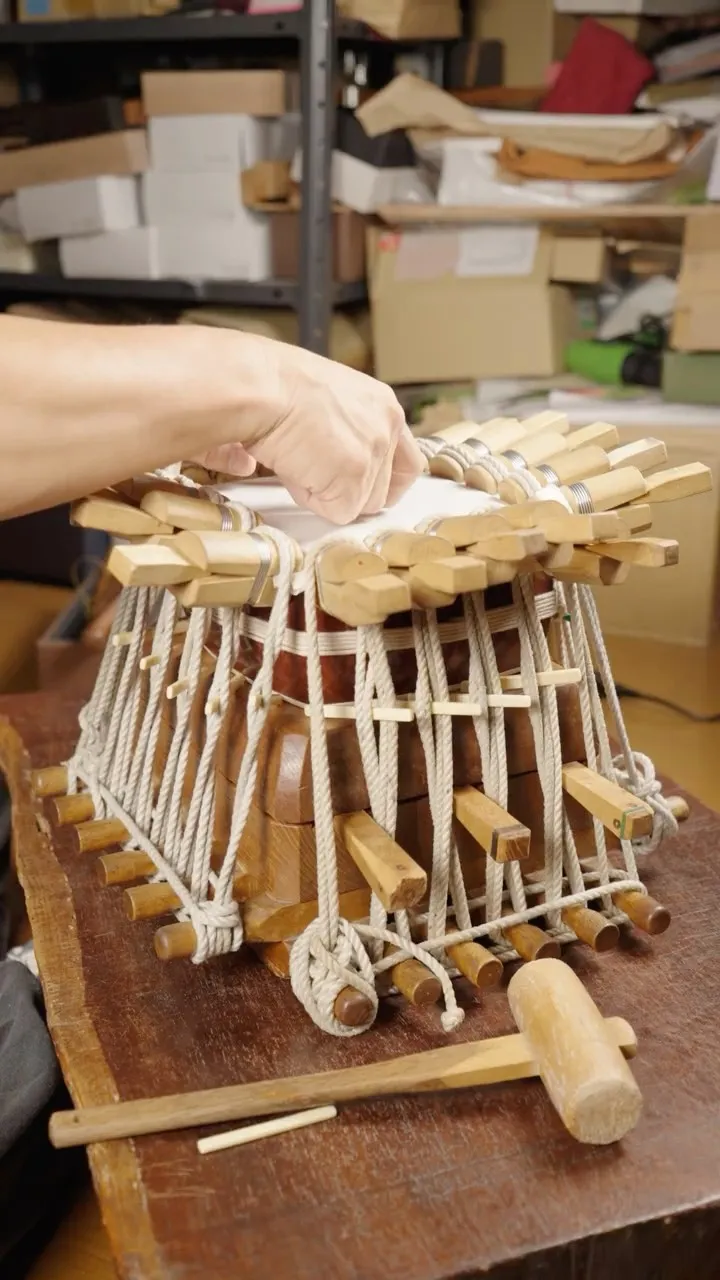
Photo: Japanese craftsman making traditional shamisen instrument workshop, via i.ytimg.com
There's a moment, if you spend enough time in the backstreet workshops of Nagasaki's older neighborhoods, when you stop trying to describe the sound and just let it sit with you. A craftsman tightens the skin of a hand-drum. The note blooms, then fades unevenly—just a little off-center, a little unpredictable. And somehow, that imperfection is exactly the point.
American musicians have been chasing this feeling for a while now. After years of digital audio workstations, pitch correction, and streaming-optimized production that compresses the life out of a mix, a growing number of players are arriving in Nagasaki not for the history or the views from Inasayama—though those don't hurt—but for the instruments. Specifically, for the people who still build them by hand, using methods that haven't changed in centuries.
The Workshop at the End of the Alley
Hiroshi Tanaka has been making shamisen for 41 years. His workshop sits two streets back from a canal in a part of Nagasaki that tourists mostly walk through on their way somewhere else. The walls are hung with tools that look closer to surgical instruments than anything you'd find at a guitar center. He doesn't advertise. He doesn't need to.
"Three years ago, maybe one American came each season," he says, running a thumb along the neck of an unfinished instrument. "Now, I have a list."
The shamisen—a three-stringed, long-necked instrument with a skin-covered resonator—produces a tone that Western ears often describe as raw, almost vocal. It buzzes. It decays in unexpected directions. To Tanaka, that's not a defect; it's the whole conversation. "The instrument speaks back to the player," he explains. "A machine cannot do this."
For musicians raised on the idea that fidelity equals quality, this reframing can feel genuinely disorienting. But many are finding it liberating.
What Compression Takes Away
Marcus Webb, a Nashville-based guitarist and session musician, spent six weeks in Nagasaki last spring. He wasn't looking to become a shamisen player. He came because a friend had mentioned that the instrument makers here understood something about resonance that most Western luthiers had quietly abandoned in the push toward consistency and scalability.
"I've played probably two hundred guitars in my career, and I can tell you what a perfect guitar sounds like," Webb says. "What I couldn't tell you anymore was what a real one sounded like. Those aren't always the same thing."
He ended up commissioning a hand-stretched drum from a maker named Keiko Mori, whose family has been crafting taiko in Nagasaki for three generations. The instrument cost him more than his first car. He doesn't regret it for a second.
This is the tension at the center of the modern music industry: streaming platforms optimize for consistency, and the loudness war of the last two decades has pushed producers toward sounds that translate cleanly across earbuds, car speakers, and laptop audio. What gets lost in that translation is what engineers quietly call "air"—the micro-variations in tone, the breath of a string, the way a drum skin responds differently to a hard strike versus a soft one. Handmade instruments from workshops like those in Nagasaki are practically engineered for air.
Learning to Listen Again
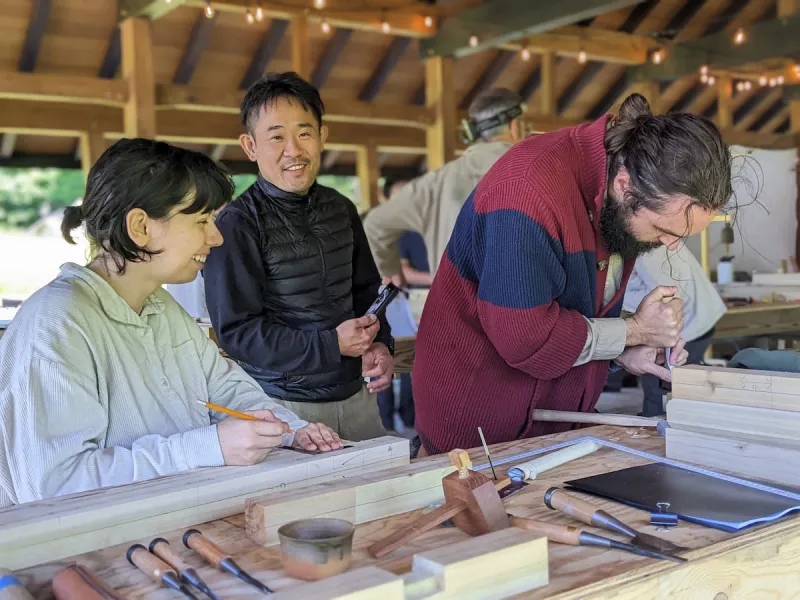
The instrument makers here aren't just selling objects. Several of them have started offering extended stays—week-long and even month-long residencies where visiting musicians learn the basics of instrument construction alongside the theory behind the sound. It's less a masterclass and more an apprenticeship in listening.
Yuki Sasamoto, who builds biwa lutes from her studio near the base of Inasayama, has hosted four American musicians in the past two years. She doesn't expect them to become craftspeople. "I want them to understand why the wood matters. Why the angle of the neck matters. When you know how something is made, you play it differently."
Several of her visitors have reported exactly that. A cellist from Seattle described returning home and feeling like she was hearing her own instrument for the first time—not because it had changed, but because she had.
The Streaming Paradox
There's an irony worth noting here. The same streaming economy that many of these musicians feel has flattened their sonic world is also, indirectly, funding their trips to Nagasaki. Royalty checks, sync licensing, and the occasional viral moment have given mid-career musicians just enough financial flexibility to step away and invest in something that can't be downloaded.
And increasingly, those instruments are showing up in the recordings themselves. Listen carefully to some of the more adventurous Americana, indie folk, and experimental jazz coming out of American cities right now, and you'll catch it—a texture that doesn't quite fit the genre, a note that hangs in the air just a beat longer than it should. Chances are decent that somewhere in the signal chain, there's a piece of Nagasaki.
Hiroshi Tanaka, for his part, seems quietly pleased by this. He's not interested in fame or in scaling his workshop. He's interested in the instruments going somewhere they'll be played. "A shamisen in a museum is not a shamisen," he says. "It is only wood."
The musicians who make the trip to his alley tend to leave understanding exactly what he means.