Born From the Ash: How Nagasaki's Darkest Chapters Forged Japan's Most Daring Creative Culture
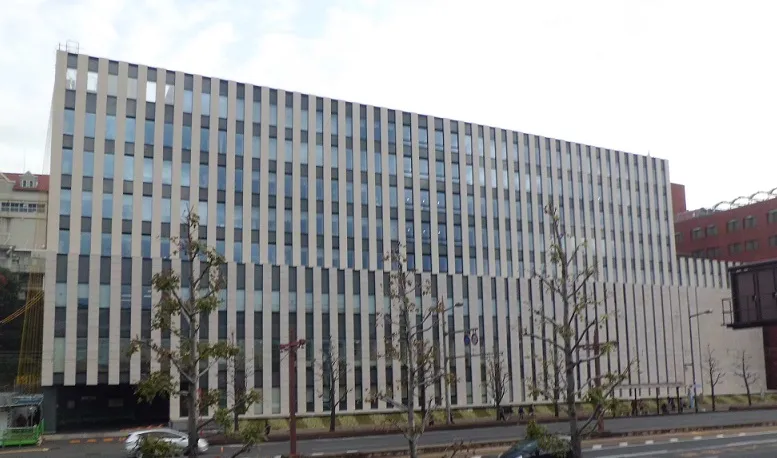
Photo: Ackeyyama, CC BY-SA 4.0, via Wikimedia Commons
There's a phrase you hear a lot around Inasayama — hikari no naka ni kage ga aru, which loosely translates to "within light, there is shadow." It's not a warning. It's more like a design principle. And once you understand it, you start to see it everywhere: in the way lanterns are hung slightly asymmetrically during festivals, in the deliberate pauses composers leave in their scores, in the ceramics that celebrate the crack as much as the glaze.
Nagasaki didn't arrive at this aesthetic by accident. It was forged — slowly, painfully, and with tremendous intention — through centuries of experience that no other Japanese city shares in quite the same combination.
The Locked Door That Became a Window
For more than two hundred years, while the rest of Japan sealed itself off from the outside world under the Sakoku policy, Nagasaki remained the one crack in the wall. Dejima, the small artificial island in Nagasaki's harbor, served as Japan's only authorized trading post with the West. Dutch merchants, Chinese traders, and Portuguese missionaries all moved through this bottleneck, leaving behind ideas, aesthetics, and influences that seeped into the city's cultural DNA in ways that still show up today.
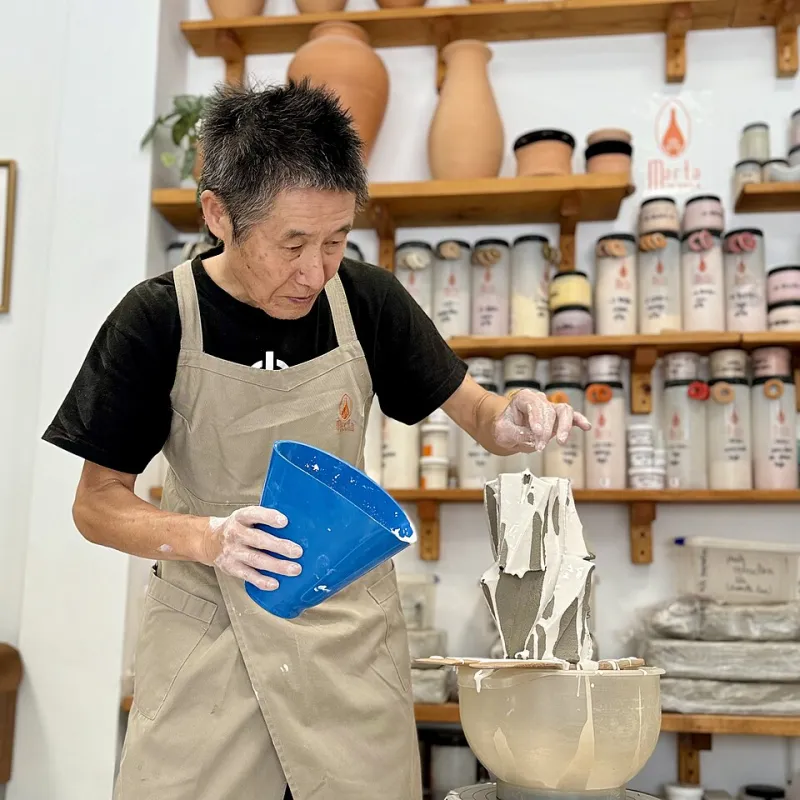
Artists in the Inasayama region talk about this inheritance constantly. "We've never been a purely Japanese city," says one ceramicist who works out of a hillside studio overlooking the harbor. "We've always been something in between. That in-between space is where the interesting work happens."
This hybridity — this comfort with contradiction — became Nagasaki's first great creative advantage. While Kyoto perfected tradition and Tokyo absorbed modernity, Nagasaki learned to hold both at once without resolving the tension. That unresolved tension, it turns out, is extraordinarily generative.
The Weight That Became a Lens
On August 9, 1945, everything changed — and nothing was ever allowed to be simple again.
The atomic bombing of Nagasaki is not something the city's artists avoid. They don't sensationalize it either. What they do instead is something harder and more interesting: they metabolize it. The event has become a kind of philosophical anchor, a reference point that forces every creative act to answer a basic question — what is this for?
You see it in the work of the city's visual artists, many of whom work in the Urakami district, the neighborhood closest to the hypocenter. The imagery isn't always explicit, but the orientation is unmistakable. There's a recurring preoccupation with threshold moments — the instant before, the space after, the gap between destruction and renewal. Shadow and light, again.
"Americans tend to think of trauma as something you recover from," says a Nagasaki-based art historian who has studied the city's postwar creative output for decades. "Here, the understanding is different. You don't recover from it so much as you incorporate it. It becomes part of your vocabulary."
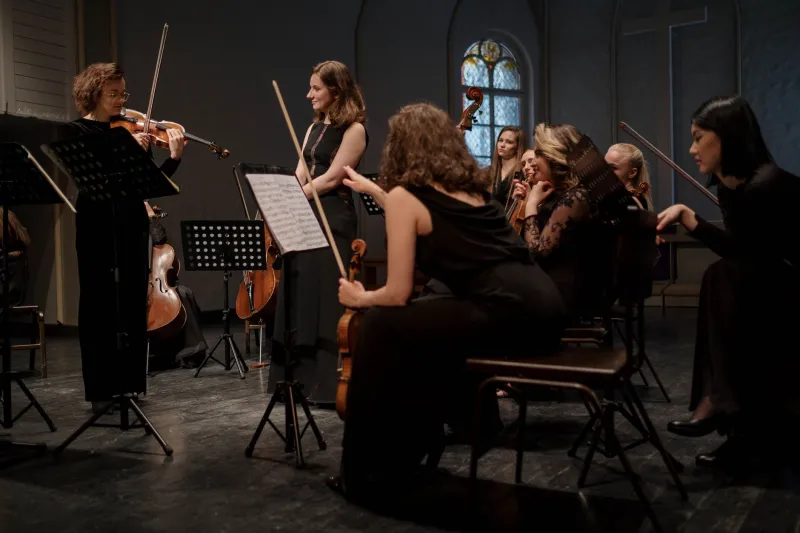
That vocabulary has produced some genuinely radical work. Nagasaki's postwar composers developed a mode of writing that treats silence not as absence but as presence — a direct echo of the stunned quiet that survivors described in the aftermath of the bombing. Visual artists began working with materials that age visibly and deliberately, refusing the Western impulse toward preservation and permanence. Even the architecture of reconstruction, particularly in neighborhoods around Inasayama, embraced an aesthetic of impermanence that would later influence Japanese designers far beyond the region.
Resilience as Aesthetic Philosophy
What separates Nagasaki's creative culture from simple tragedy tourism — or from the kind of grief-as-brand identity that some cities lean into — is that the work here is fundamentally optimistic. Not cheerfully, superficially optimistic, but optimistic in the way that someone who has genuinely reckoned with mortality tends to be: clear-eyed, grounded, and weirdly free.
The concept of kintsugi — the Japanese practice of repairing broken pottery with gold, making the breakage part of the beauty — originated in Kyoto, but it has found its spiritual home in Nagasaki. It's almost impossible to spend time in the creative communities around Inasayama without encountering the idea in some form, applied not just to ceramics but to music, to architecture, to storytelling, to the way people talk about their own lives.
"The break is not the end of the story," one woodworker told us, running a finger along a repaired joint in a cabinet he'd been building for six months. "The break is where the story gets interesting."
For American audiences raised on narratives of triumph-over-adversity — where the break is a problem to be solved and erased — this is a genuinely different proposition. It asks you to sit with the damage. To find something worth keeping in it.
Why American Creatives Are Paying Attention
Over the past several years, a quiet but steady stream of American artists, writers, and designers has been making its way to Nagasaki — not as tourists, but as students. They come looking for something the American creative economy, for all its energy and resources, hasn't been able to give them: a framework for meaning-making that doesn't depend on productivity, virality, or market validation.
What they find in Inasayama's studios and performance spaces and tea rooms is an artistic culture that has been stress-tested by actual history. The philosophy isn't theoretical here. It was earned.
That might be the most important thing Nagasaki has to teach the rest of the world right now. Not a technique or a style, but a way of orienting toward difficulty — of understanding that the darkest chapters aren't detours from the story of a place. They're the chapters that make everything else make sense.
The light from Inasayama has always been brightest against a dark sky. That's not a coincidence. That's the whole point.