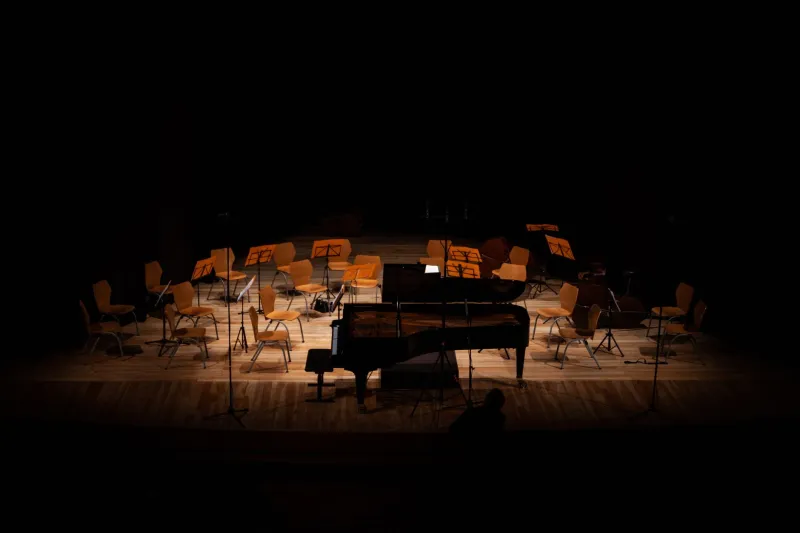
What Nagasaki's Orchestras Know About Silence That American Concert Halls Have Forgotten
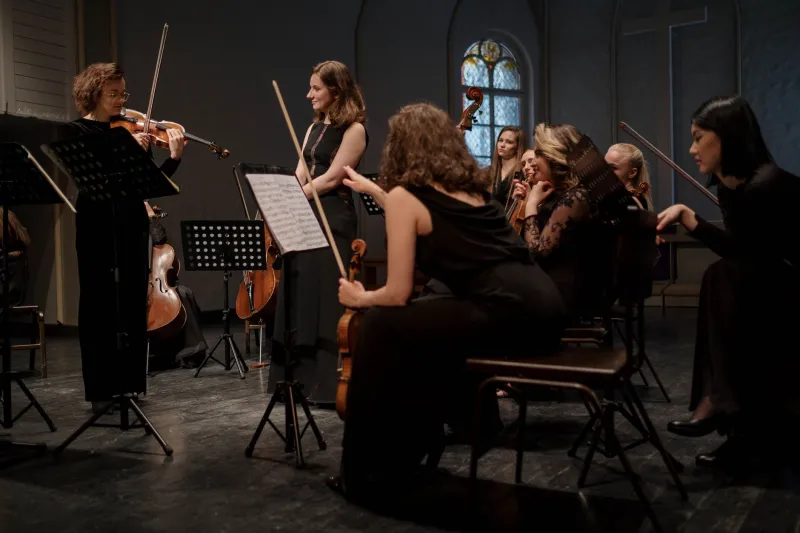
Somewhere in the middle of a performance by the Nagasaki Chamber Ensemble last spring, an American tourist named Dana Kowalski from Portland, Oregon, did something she'd never done at a concert before: she stopped waiting for the next sound.
"I realized I was holding my breath," she said afterward. "Not because I was anxious. Because the silence felt like it was saying something. I didn't want to miss it."
That moment — suspended, deliberate, oddly intimate — is exactly what the musicians of Nagasaki have been cultivating for years. And it's starting to reach audiences who never expected a Japanese concert hall to teach them something about their own inner noise.
The Architecture of Quiet
To understand what makes Nagasaki's orchestral culture distinct, you have to start with a concept that most Western music education treats as a technicality: the rest.
In standard music notation, rests are gaps. Necessary pauses between the real stuff. But in the approach developed and refined by several of Nagasaki's leading ensembles — particularly those with roots in the contemplative traditions of the Inasayama region — a rest is closer to a held breath than an absence. It's active. It carries weight.
Kondō Ryūsei, principal conductor of one of the city's most respected chamber groups, describes it this way: "In American orchestral culture, silence often feels like a problem to be solved. The music rushes to fill it. We were trained — many of us — to think differently. The space after a phrase is where the listener finishes what the musician started."
That's not just poetic language. It reflects a genuine compositional philosophy, one that Kondō and his colleagues trace back to influences as varied as Noh theater, Zen Buddhist ceremony, and the peculiar acoustic stillness of Nagasaki's mountainside venues, where sound behaves differently than it does in a city concert hall.
Why Americans Find It Disorienting at First
Let's be honest: the first time many Western listeners encounter this approach, it doesn't feel transcendent. It feels uncomfortable.
"I thought the musicians had made a mistake," laughed Marcus Ellroy, a music teacher from Nashville who attended a performance during a heritage tour of Kyushu. "The pause was so long. I looked around to see if anyone else was confused. Nobody was. Everyone just... sat with it."
That discomfort is something the musicians are aware of — and, frankly, count on.
"Americans are trained by their media environment to expect constant stimulation," says flutist Hayashi Emiko, who has performed with ensembles in both Nagasaki and New York. "Streaming services, playlists, background music in every café — there is very little cultural space in the US for intentional quiet. When we perform, we are not just playing notes. We are asking the audience to tolerate, and eventually welcome, emptiness."
Hayashi is careful not to frame this as criticism. She's genuinely curious about what happens when audiences from high-stimulation environments encounter deliberate sonic restraint. "The discomfort is real," she says. "But so is what comes after it."
The Mindfulness Connection Nobody Planned
Here's where things get interesting. Nobody in Nagasaki's classical music scene set out to create a wellness experience. They were making art. But the overlap between their approach to silence and the principles behind mindfulness meditation has become impossible to ignore.
In mindfulness practice — the kind that's become genuinely mainstream in American cities over the last decade — the goal is often to observe thoughts and sensations without immediately reacting to them. To sit with discomfort rather than escape it. To notice what's present in the space between one moment and the next.
Sound familiar?
"I've had audience members come to me after performances and say they felt like they'd meditated for an hour without trying," says Kondō. "I find that fascinating, because we are not doing anything spiritual intentionally. We are just being honest about what music is: organized time. And time includes stillness."
For Dana Kowalski, the connection was immediate and personal. She'd been practicing mindfulness for two years before her trip to Japan, mostly through apps and guided sessions. "What happened in that concert hall was different," she said. "It wasn't guided. Nobody told me what to feel. The music just... opened a door and left me alone in a room. In a good way."
Listening as a Practice, Not a Pastime
What Nagasaki's orchestras are really offering — whether they frame it this way or not — is a reframe of what it means to be an audience member.
In most American concert settings, listening is passive. You sit, the musicians perform, you applaud at the right moments. The experience flows in one direction. But in the chamber halls and hillside venues of Nagasaki, the silence turns that relationship around. The listener is suddenly required to participate. To contribute something. Their own attention, their own stillness, their own willingness to not reach for their phone.
"We joke that our performances are the only place in modern life where the audience has to do something," says Hayashi with a smile. "Not clap, not sing along. Just be present. It sounds simple. It is not simple."
For American visitors who make the trip — and more are making it, drawn partly by Nagasaki's growing reputation as a destination for authentic, unhurried cultural experiences — the learning curve is real. But so is the payoff.
Marcus Ellroy, the Nashville music teacher, went back for a second performance before his trip ended. "I needed to try again knowing what was coming," he said. "The second time, I didn't flinch at the silences. I leaned into them. By the end I felt like I'd been wrung out and refilled with something cleaner."
What to Expect If You Go
If you're planning a visit to Nagasaki and want to experience this for yourself, a few practical notes:
Performances by the city's chamber ensembles are held in various venues throughout the year, with a concentration of events in the cooler months when the mountain air around Inasayama lends the outdoor and semi-outdoor settings an especially resonant quality. Smaller, more intimate recitals tend to showcase the silence-as-composition approach more clearly than larger orchestral events, so look for chamber performances specifically.
Go without expectations if you can manage it. Don't try to meditate. Don't try to analyze. Just listen — and when the music stops, resist the urge to fill the gap in your head. That's the whole practice, right there.
"We are not teaching meditation," Kondō says, with the quiet certainty of someone who has thought about this a great deal. "We are teaching people to hear what was always there. The silence was never missing. People just stopped noticing it."
In Nagasaki, they're noticing again. And slowly, one disoriented American at a time, the word is getting out.