Unfinished on Purpose: The Nagasaki Composers Showing Americans That Incompleteness Is the Point
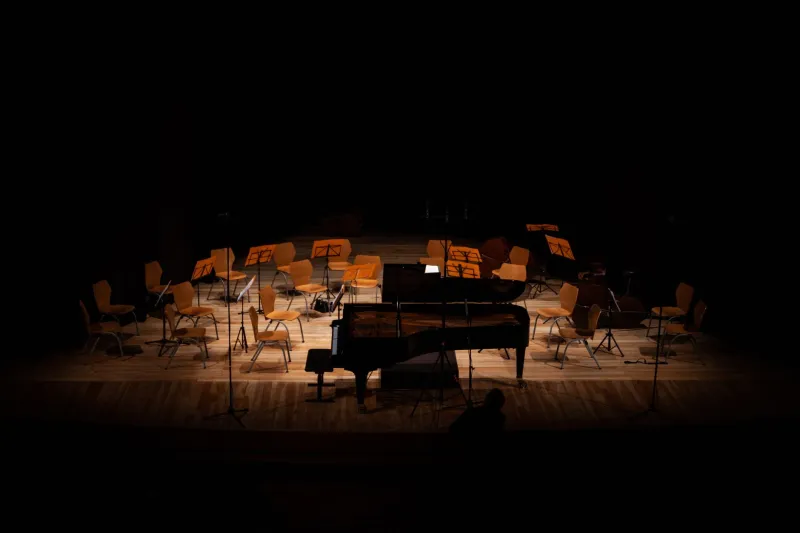
There's a moment in a recent performance by Nagasaki-based composer Yuki Shiraishi where the piano stops mid-phrase. Not because something went wrong. Not because the performer lost her place. The note simply ends — and then there's nothing. No resolution. No return. Just open air where a chord should have been.
The audience doesn't applaud. They don't shift in their seats. They sit inside the gap, and something strange happens: they start listening harder than they were before.
This is the whole point.
Shiraishi is one of a growing number of Nagasaki artists working under a loose creative philosophy that locals have started calling ma-based composition — a practice that treats silence, incompleteness, and unresolved tension not as flaws to fix, but as the actual medium. The term borrows from the Japanese concept of ma, roughly translated as the meaningful pause or negative space between things. But what these composers are doing pushes that idea somewhere more deliberate, more architectural. They're not just leaving room for silence. They're engineering it.
And somehow, it's Americans who can't stop talking about it.
What "Interval Architecture" Actually Means
The phrase "interval architects" gets thrown around a lot in Nagasaki's experimental arts circles, and it sounds abstract until you experience one of these performances firsthand. Think of it less like traditional composition and more like designing a room with specific empty spaces — where the walls stop, where the light doesn't reach, and what those absences make you feel.
Composer Ren Takigawa, who teaches at a small arts collective near the base of Inasayama, describes his work as "building doorways and never installing the doors." His pieces often feature recurring melodic fragments that never complete their arc. A listener keeps expecting the phrase to land, and it never does. Over time, that expectation itself becomes the emotional content of the piece.
"Most Western music is about arrival," Takigawa explains through a translator. "We're interested in the permanent state of almost arriving. That's where people actually live."
For American audiences raised on streaming services that auto-play the next track before the last one fades, the experience of sitting inside an unresolved musical moment can feel genuinely disorienting at first. Then, for a lot of people, it feels like relief.
Why Burned-Out Americans Are Paying Attention
It's not a coincidence that this particular artistic movement is gaining traction in the US right now. Creative professionals — designers, writers, therapists, educators — are increasingly vocal about the toll that constant completion pressure takes on the brain. The cultural expectation that everything must be finished, polished, and delivered is something a lot of Americans are quietly exhausted by.
When clips of Shiraishi's performances started circulating on social media last year, the comments section filled up less with music criticism and more with something that read like personal recognition. People weren't analyzing the compositions. They were describing how the unfinished phrases made them feel seen in some way they couldn't fully articulate.
A UX designer in Portland wrote that watching the performance made her realize she'd been treating every project like it needed a bow on it, and that the discomfort she felt at the hanging note was exactly the discomfort she'd been carrying into every deadline. A high school music teacher in Ohio said she'd started incorporating deliberate incompleteness into her classroom exercises — leaving bars unfinished and asking students to sit with the open space before filling it in.
That kind of cross-disciplinary adoption is something the Nagasaki arts community didn't entirely anticipate, but it tracks with the philosophy. If the gap is where the meaning lives, then the gap is portable.
The Inasayama Influence
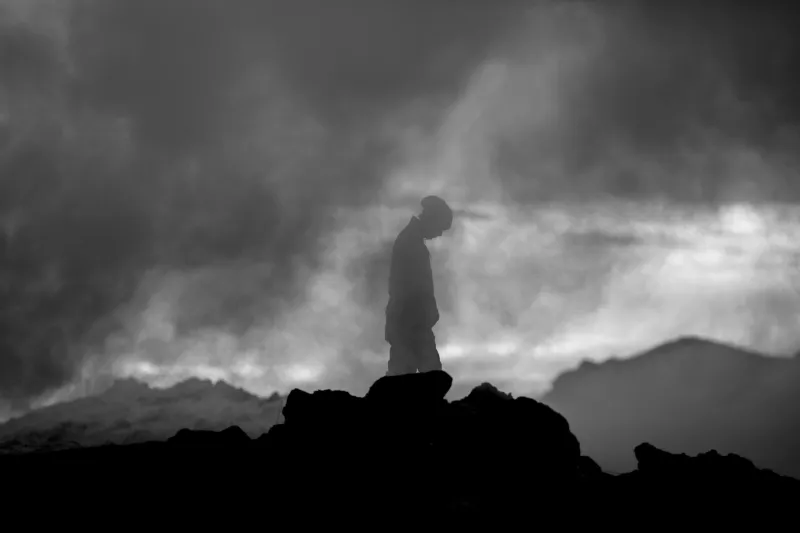
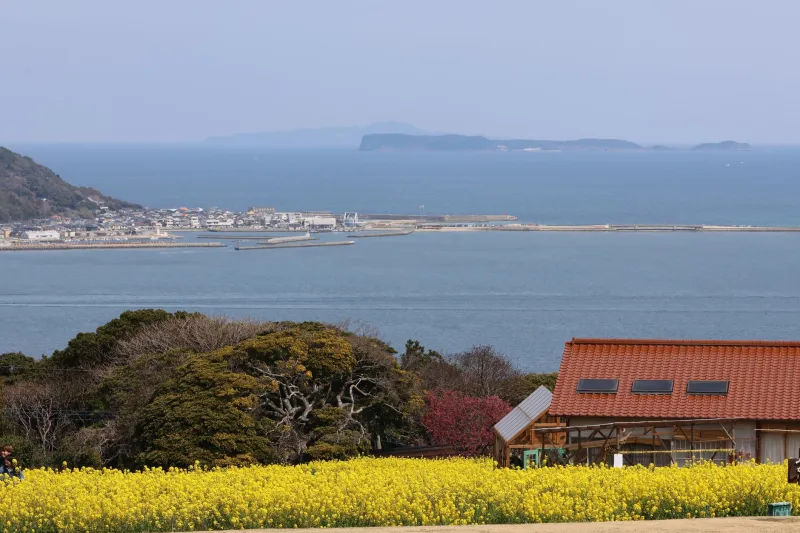
It's hard to talk about this creative movement without talking about the mountain. Inasayama has always had a particular relationship with stillness — the way the fog rolls in and sits between the trees, the way the harbor light hits at dusk and then just holds there before shifting. Artists who spend time on the mountain consistently describe a recalibration of pace. Things that felt urgent at sea level start to feel optional up here.
Takigawa says he does most of his composing on early morning walks along the ridge trails, not at a keyboard. "The mountain doesn't finish its sentences either," he says. "The view cuts off. The path disappears into mist. You keep walking anyway."
There's something about that specific geography — the port city below, the sacred slopes above, the long history of Nagasaki as a place where different worlds met and didn't always resolve — that seems to produce artists unusually comfortable with open endings.
Productive Incompleteness as a Practice
For those who can't make it to Nagasaki anytime soon, the ideas coming out of this scene are increasingly accessible through recordings, online workshops, and a quietly growing body of writing from the artists themselves.
Shiraishi has been developing what she calls a personal "incompleteness practice" — a set of daily exercises designed not for musicians specifically, but for anyone who creates anything. The core of it is simple: finish sixty percent of something, then stop. Sit with what's there. Notice what the unfinished portion is doing to your attention.
"Most people discover that the incomplete version is doing more work than the finished one would have," she says. "The imagination fills the gap with something more personal than anything I could have written."
That's the deeper argument these artists are making — that incompleteness isn't a lesser version of completion. It's an invitation for the audience to become a collaborator. The gap isn't empty. It's where the listener's own experience rushes in.
What This Means for American Creative Culture
American culture has a complicated relationship with the unfinished. We celebrate the pivot, the iteration, the MVP — but we also have a deep discomfort with anything that feels inconclusive. The pressure to wrap things up, to deliver a takeaway, to end on resolution, runs through everything from corporate presentations to how we structure our social media posts.
What Nagasaki's interval architects are offering isn't just an aesthetic preference. It's a kind of permission. Permission to let a thing breathe before you close it. Permission to trust that the pause carries meaning. Permission to stop before the period and let the reader — or the listener, or the viewer — write the last word themselves.
For a country that's been running on overstimulation for a long time, that permission is landing somewhere deep.
The music stops. The note hangs. The silence opens up.
And somehow, that's exactly enough.