Quit, Fly, Learn: The Americans Rebuilding Their Careers Inside Nagasaki's Craft Workshops
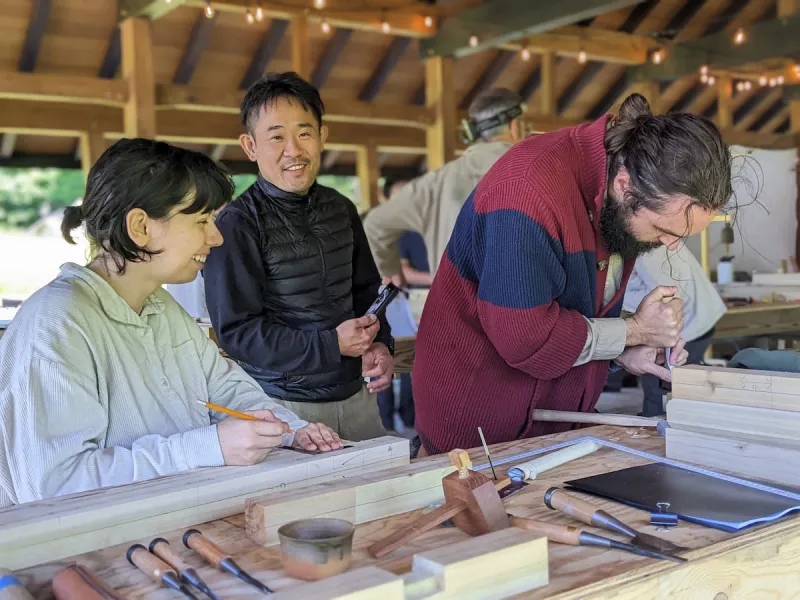
Photo: American person learning traditional Japanese woodworking craft workshop, via theyearofmud.com
Jamie Kowalski spent eleven years as a UX designer in San Francisco. She was good at it—genuinely good, the kind of good that gets you promoted and then promoted again until you're managing a team of twelve and spending most of your day in meetings about other people's work. In the spring of 2022, she gave her notice, packed a single large bag, and flew to Nagasaki to learn how to dye fabric.
"People thought I was having a breakdown," she says, laughing. "I wasn't. I was having the opposite of a breakdown. I finally knew exactly what I wanted to do, and this was the only place in the world where I could learn it properly."
Kowalski had discovered bingata—an Okinawan resist-dyeing technique with strong historical roots in Nagasaki's textile trade—through a documentary she'd watched during a bout of insomnia. Within six months, she'd arranged a three-month apprenticeship with a textile workshop near the old Dutch settlement district. Within a year, she'd extended her stay and begun selling her own work.
Her story is unusual. But it's not as unusual as it used to be.
The Flight From Credentials
Something is happening among American professionals in their thirties and forties, and it's more than burnout. Burnout implies exhaustion—a temporary state that a vacation or a sabbatical can fix. What many of the Americans arriving in Nagasaki's craft workshops describe is something more structural: a loss of faith in the credential-and-promotion model of professional identity.
For this generation, the deal was simple. Get the degree, get the job, accumulate expertise through institutional channels, and eventually arrive at a position of competence and meaning. For a lot of people, that deal didn't pan out the way it was supposed to. The meaning part, in particular, proved elusive.
What traditional craft apprenticeship offers—and Nagasaki, with its dense network of working ateliers and master craftspeople, offers it in unusual abundance—is a completely different model of expertise. You learn by doing, under direct supervision, with immediate and tangible feedback. You can hold what you've made. You can feel when it's wrong and when it's right. There are no performance reviews, but there are also no ambiguities.
"In my old job, I could work incredibly hard for a year and not be able to point to a single thing I'd made," says Derek Alston, a former financial analyst from Atlanta who spent four months apprenticing with a Nagasaki metalsmith. "Here, I made something every day. Sometimes it was terrible. But it existed. I could see it."
Inside the Workshops
The craftspeople accepting these American apprentices are, for the most part, not running formal programs. They're running workshops, and the distinction matters. Kenji Watanabe, a woodworker who operates a studio near Inasayama, started taking Western students almost by accident—a friend of a friend showed up at his door with a translation app and a very sincere request. He's had six American apprentices since then, none of them staying fewer than six weeks.
Watanabe is direct about what he's looking for. "I don't need someone who already knows woodworking. I need someone who can be quiet and pay attention. Americans are sometimes loud," he says, with a smile that suggests this is not entirely a criticism. "But when they decide to listen, they listen very hard."
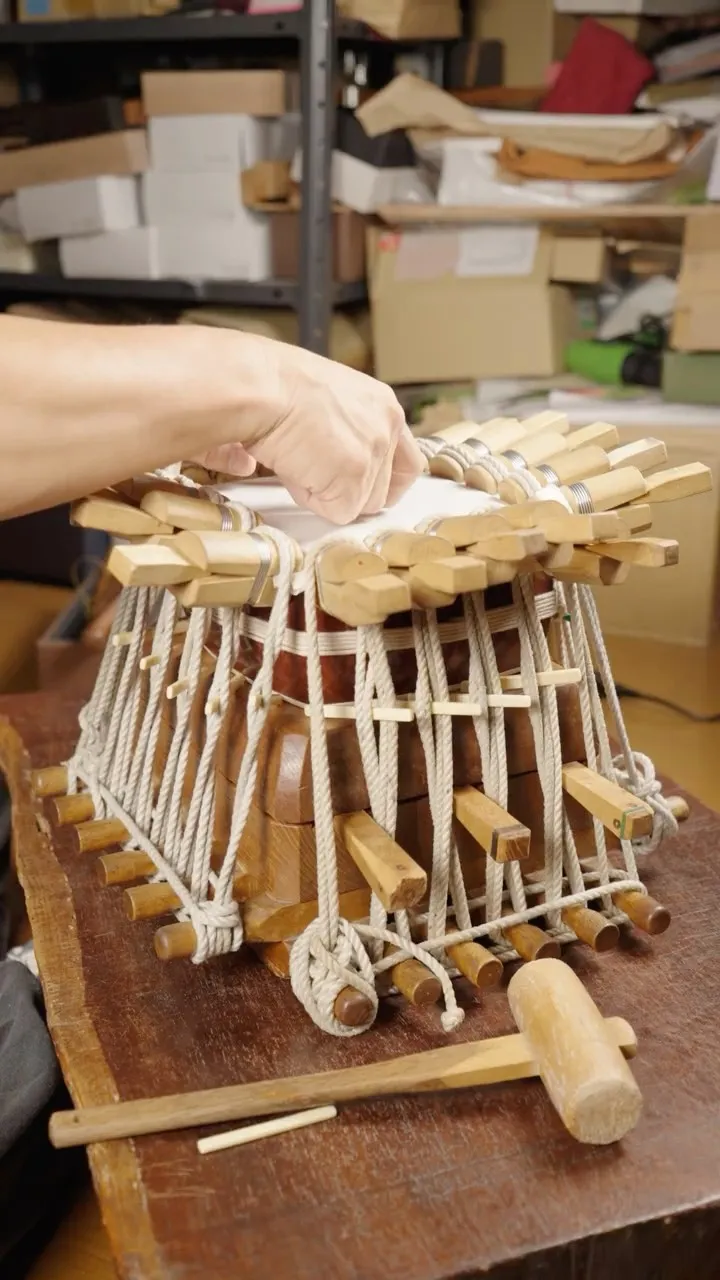
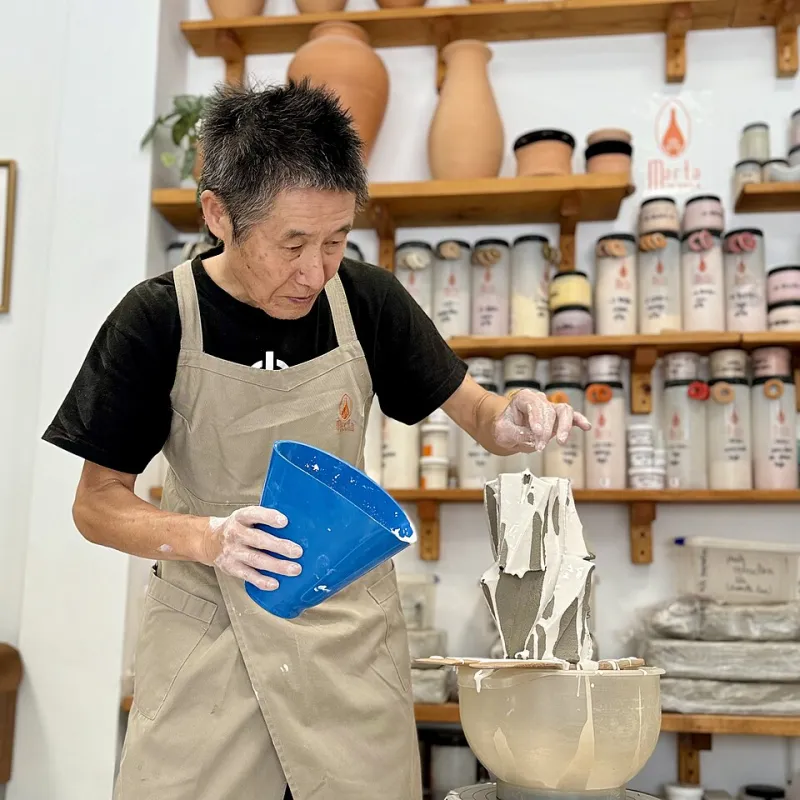
The skills being transmitted are varied—woodworking joinery, traditional metalwork, indigo dyeing, paper-making, lacquerwork—but the underlying pedagogy is consistent. Watch. Try. Fail. Watch again. The language barrier, counterintuitively, seems to help. Without the ability to explain or argue or ask too many questions, apprentices are forced into a mode of pure observation that many describe as transformative.
What They Bring Home
The career outcomes are genuinely mixed, and the craftspeople here are the first to acknowledge that. Not everyone who spends three months learning metalwork in Nagasaki comes home and opens a studio. Some return to their old industries with a new side practice. Some pivot entirely. Some just come back changed in ways that are hard to articulate but unmistakable to the people around them.
Kowalski, the UX designer turned textile artist, now operates a small studio in Portland and consults part-time for the tech industry—on her terms, for clients she chooses. She's clear-eyed about the financial reality. "I make less money. I work less. I feel better." She pauses. "I know that's a privilege. I'm not pretending it isn't."
Alston returned to Atlanta and has built a modest but growing metalwork practice alongside contract financial consulting. He didn't abandon his old skills; he layered new ones on top. "I think about problems differently now," he says. "I don't know how to explain it except to say that working with your hands changes something in the way your brain organizes information."
The Broader Signal
Whether this constitutes a trend or a movement is genuinely unclear. The numbers are small enough that it could be statistical noise—a few dozen Americans a year making their way to Nagasaki's workshops, hardly a mass migration. But the cultural appetite it reflects feels significant.
America is in the middle of a slow, unglamorous conversation about what work is supposed to feel like and what expertise is supposed to look like. The rise of trade school enrollment, the backlash against four-year degree requirements, the boom in hobbyist craft culture—Nagasaki's apprenticeship moment sits inside all of these currents at once.
Watanabe, for his part, isn't thinking about trends. He's thinking about his next student, who arrives from Minneapolis in three weeks. She's a former HR executive who wants to learn joinery. He's already cleared a bench.
"I don't know if this is important for America," he says, smoothing a plank of hinoki cypress with the flat of his hand. "I only know it's important for the people who come. That seems like enough."