Sacred Ground, Open Canvas: The Hidden Shrines of Inasayama That Artists Can't Stop Photographing
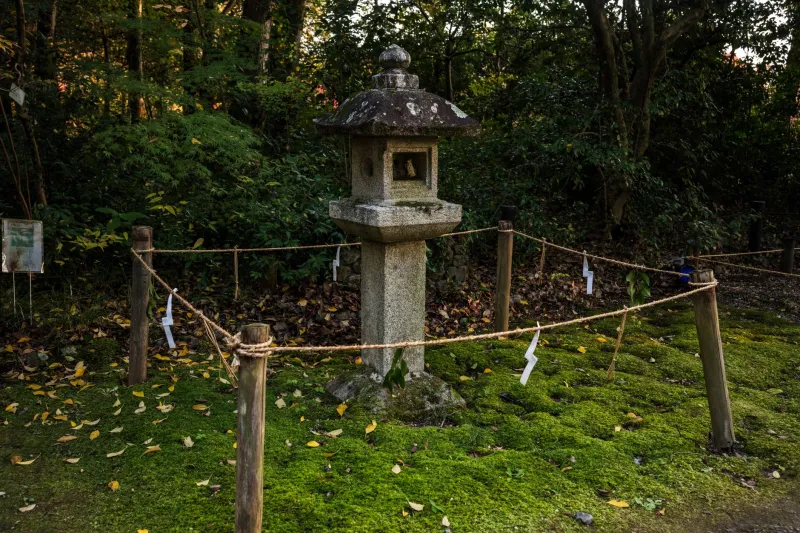
There's a particular kind of quiet you find on the upper paths of Inasayama that doesn't exist in most places Americans associate with Japan. Not the theatrical stillness of a Kyoto rock garden — curated, photographed a million times, gently herded by tour groups — but something rawer. A shrine gate so old the red paint has faded to the color of dried roses. Stone lanterns wearing thick coats of moss like they've decided to become part of the hillside. Light arriving through cedar canopy in long, slow columns that feel almost architectural.
Artists noticed this first. Then the photographers. Now, quietly and without much fanfare, Inasayama's overlooked network of Shinto shrines and small Buddhist sanctuaries is becoming one of the most talked-about creative destinations in Japan — at least among the people who actually make things.
Why These Shrines Got Left Behind (And Why That's the Point)
Nagasaki's religious landscape is genuinely unusual. Centuries of contact with Portuguese missionaries, Dutch traders, and Chinese merchants layered faith traditions on top of each other in ways that never quite happened elsewhere in Japan. The result is a region where Buddhist temples and Shinto shrines sometimes sit within shouting distance of each other, and where the sacred and the everyday have always been a little blurry.
But the shrines tucked into Inasayama's slopes — some of them dedicated to Megami, the goddess whose name is woven into this part of the harbor — never attracted the infrastructure that built up around more famous sites. No gift shops. No timed entry tickets. No Instagram-optimized torii gates with a line of tourists waiting to take the same shot.
For a long time, that meant they were simply overlooked. Now it means they're irreplaceable.
"There's nothing to perform here," says one Osaka-based photographer who has made three separate trips to shoot along Inasayama's upper trails. "At the big shrines, you're always aware of other people doing the same thing you're doing. Here, you're just alone with the place. That changes what you make."
What the Light Does Here
Ask any photographer who's spent serious time on Inasayama and they'll bring up the light before you've finished your question. It's not just that the mountain faces the harbor in a way that catches golden-hour reflections off the water — though it does, spectacularly. It's that the forest canopy on the shrine paths filters and fractures sunlight into something that behaves more like a living thing than a physical phenomenon.
Wooden shrine structures that might look plain in flat light suddenly develop texture and depth when afternoon sun rakes across them at low angles. Stone steps covered in wet moss become studies in green so saturated they look almost digitally altered — except they're not. The natural world here does the work that editing software usually handles.
For painters, the challenge is almost the opposite problem: how do you simplify something this visually dense without losing what makes it feel sacred? Several artists from the Nagasaki arts community have described these shrines as spaces that force you to make decisions about what matters, because you genuinely cannot capture everything at once.
The Pilgrims Who Aren't Praying (Or Maybe Are)
The people making their way up these paths with camera bags and sketchbooks aren't all religious, and most would probably resist the word "pilgrimage." But there's something in the way they talk about these visits that keeps bumping up against spiritual language anyway.
A ceramicist from Brooklyn who spent two weeks in Nagasaki last autumn described her daily walks to a small shrine above the Megami area as "the only time I felt like my brain stopped trying to be productive." A filmmaker from Los Angeles said he came to shoot B-roll and ended up sitting in front of a weathered wooden altar for forty minutes without touching his camera. "I don't know what happened," he said. "I just stopped."
This is, it turns out, more or less what these spaces were designed to do — just not necessarily for secular American creatives in their thirties. The fact that the effect translates across cultural context says something interesting about what these shrines actually are, beneath the specific theology.
How Local Artists Are Responding
The creative attention these spaces are attracting hasn't gone unnoticed by Nagasaki's own arts community, and the response has been thoughtful rather than commercial. A loose collective of local artists has been documenting the shrines photographically over the past several years — not to promote them as tourist attractions, but to create an ongoing record of spaces that are genuinely vulnerable to time and weather.
Some of that documentation has evolved into something more dialogic: contemporary paintings and photographs displayed in small community spaces in Nagasaki that use the shrines as a starting point for conversations about memory, impermanence, and what it means to tend something sacred in a secular age. It's not a formal exhibition circuit. It's more like a conversation that keeps finding new rooms to happen in.
There have also been quiet collaborations between visiting artists and local shrine caretakers — people who've been maintaining these spaces for decades, often with minimal institutional support. A few of those relationships have produced work that feels genuinely mutual: images and objects that carry the perspective of someone who visits once and someone who shows up every morning regardless.
Coming Here Without Wrecking It
This is the part where any honest piece about a place like this has to slow down and say something careful. The reason these shrines work as creative spaces is precisely because they haven't been overrun. The moss is still on the stones. The silence is still intact. The light still does what it does because nobody has cleared the trees to make the shot easier.
If you come — and we're not telling you not to — come the way you'd want someone to come to something you loved. Walk quietly. Don't move objects for a better composition. If a space feels private or actively maintained, treat it that way. Ask before you photograph anything involving people.
And maybe leave the content calendar at home. Some of the best things that happen in places like this are the ones you can't post.
Inasayama has been holding light for a long time — longer than any of us have been paying attention. The shrines on its slopes are still here, still doing what they were built to do. The artists who find them tend to leave changed in ways they didn't anticipate. That's not an accident. That's what sacred spaces are for.