Where the Harbor Remembers: Nagasaki's Port History and the Artists It Won't Let Go
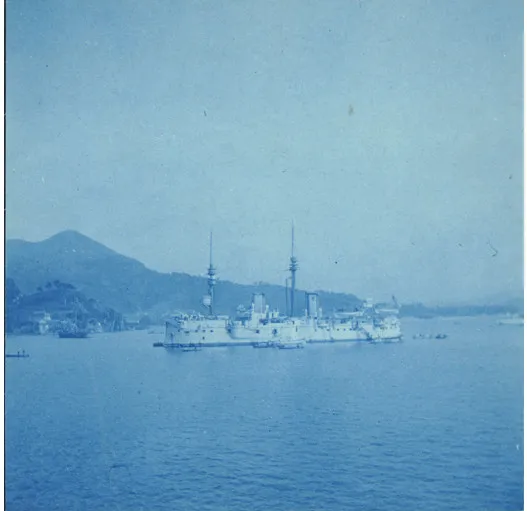
Photo: Unknown authorUnknown author, Public domain, via Wikimedia Commons
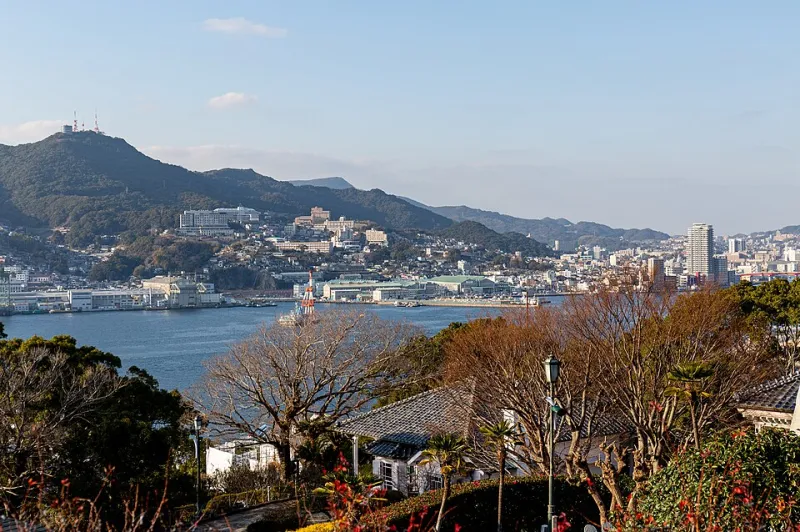
There's a particular kind of light that hits the water in Nagasaki's harbor just before dusk — a low, amber spread that makes the whole bay look like it's been painted rather than photographed. Stand on the slopes of Inasayama long enough and you start to understand why this city has been producing artists for centuries. The view alone feels like an argument for creativity.
But Nagasaki's relationship with art isn't just about scenery. It runs deeper than that — all the way down to the harbor floor, where the weight of history presses against the present in ways you can actually feel.
A Port Unlike Any Other
For most of the Edo period, when Japan had sealed itself off from the outside world, Nagasaki was the one exception. The Dutch trading post on the artificial island of Dejima kept a thin but vital channel open between Japan and the West. That single crack in the wall changed everything — not just economically, but culturally. Western medicine, astronomy, painting techniques, and music theory all seeped into Japan through this port. Nagasaki became, almost by accident, the country's most cosmopolitan city.
That legacy didn't evaporate when the trade routes shifted. It soaked into the architecture, the food, the festivals — and most of all, into the way Nagasaki's creative community thinks about itself. Local artists will tell you, often unprompted, that there's something fundamentally outward-looking in the city's DNA. "We've always been the place where outside ideas come in and get transformed," says one Nagasaki-based printmaker whose work blends traditional Japanese woodblock techniques with Dutch etching methods. "That's not history. That's just how we work."
Scars That Became Source Material
The 20th century hit Nagasaki hard. The atomic bombing of 1945 left wounds that the city has spent decades processing — and art has been one of the primary tools for doing that work. But what's striking to visitors, especially Americans who arrive with a certain expectation of how that history will be handled, is how Nagasaki's artists tend to approach the subject with a kind of unflinching tenderness rather than bitterness.
Musicians have been particularly drawn to the harbor as a site of that reckoning. There's a small but serious experimental music scene here — one that doesn't get much press outside of Japan — that has spent years working with field recordings made along the waterfront. The creak of old moorings, the low horn of a departing ferry, rain on the surface of the bay. These sounds get layered into compositions that feel less like performances and more like acts of listening. Like the city is being given a chance to speak for itself.
One composer who's been doing this work for over a decade describes the harbor as "a place that holds multiple timelines at once." Standing at the water's edge, she says, you can almost feel the Dutch merchants, the wartime sailors, and the modern cargo crews all occupying the same space. Her music tries to make that overlap audible.
The Warehouses Are Open Now
In recent years, Nagasaki's port district has undergone a quiet but significant transformation. Old dockside warehouses — the kind of heavy, utilitarian structures that used to store goods waiting for ships — have been converted into studios, galleries, and performance spaces. It's a story that will feel familiar to anyone who's watched Brooklyn or Detroit go through similar reinventions, but with a distinctly Nagasaki flavor.
The artists who've moved into these spaces aren't trying to gentrify the waterfront so much as they're trying to stay close to it. The proximity to the harbor matters to them. Several have mentioned that working within earshot of the water changes the pace of their thinking — slows it down, makes it more deliberate. There's something about the tidal rhythm, the constant low-grade noise of a working port, that resists the kind of frantic output culture that dominates art scenes in Tokyo or Osaka.
One painter who relocated from Tokyo to set up her studio in a converted warehouse near the water puts it plainly: "In Tokyo, you make work to show work. Here, you make work because you can't help it."
Looking Out, Looking In
What ties all of this together — the historical layering, the sonic experiments, the warehouse galleries — is a particular quality of attention that Nagasaki seems to cultivate. From the heights of Inasayama, looking down at the harbor below, the city's whole story becomes visible at once: the bay that connected Japan to the world, the neighborhoods rebuilt from ash, the ships still coming and going as they always have.
For American visitors who make it here, the experience tends to be unexpectedly personal. This is a city that has had to think hard about its relationship with the United States — and has arrived, through decades of artistic and cultural work, at something that feels less like resolution than like ongoing, honest conversation. That's not a small thing.
The artists working in Nagasaki today are inheritors of a tradition that has always known how to take what arrives from outside and make it into something new. The Dutch influence became Japanese. The wartime grief became music, paint, poetry. The empty warehouses became studios.
The harbor keeps delivering. The city keeps transforming what it receives.
That's the creative soul of Nagasaki — not a fixed thing, but a process. And if you're looking for a place where that process is happening in real time, you could do a lot worse than standing on the slopes of Inasayama at dusk, watching the light change over the water, and listening for what the port is trying to say.