Sitting in the Light: How Nagasaki's Buddhist Monks Are Turning Illumination Into a Path to Presence
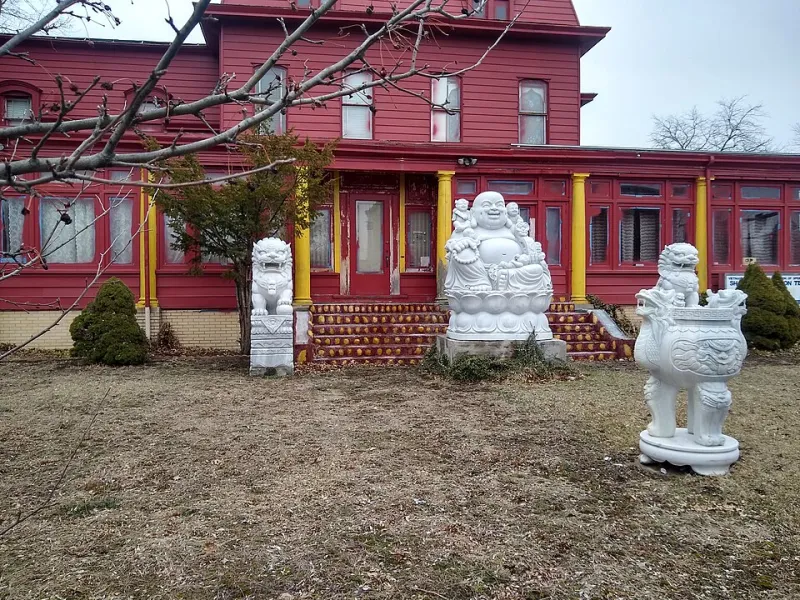
Photo: Godstar23, CC0, via Wikimedia Commons
Most people who visit a Buddhist temple in Japan come expecting incense, silence, and maybe a gong echoing across a stone courtyard. What they don't expect is to walk into a meditation hall bathed in slowly shifting indigo light, pulsing so gently it almost feels like breathing. But that's exactly what's happening at a small cluster of temples on and around Nagasaki's Inasayama mountain — and once you've experienced it, ordinary mindfulness apps start to feel a little hollow.
This isn't some tourist gimmick. The monks here have been thinking seriously about light for a long time. And lately, they've started doing something with those thoughts that feels genuinely new.
Ancient Roots, Modern Glow
Buddhist philosophy has always had a complicated relationship with light. Enlightenment — the whole point of the practice — literally means illumination. Candle flames have anchored meditation rituals for centuries. So in a way, the leap from a single flickering taper to a carefully programmed LED installation isn't as radical as it sounds.
Monk Ryokan Tanabe, who has practiced at Shofukuji Temple near the base of Inasayama for over two decades, puts it plainly: "We are not replacing tradition. We are asking what tradition was always pointing toward."
Tanabe began experimenting with light around 2018, after a conversation with a Nagasaki-based lighting designer who had been studying how color temperature affects the nervous system. The two started collaborating quietly — no press, no social media — running small sessions for local practitioners where the meditation hall would shift from warm amber to deep violet over the course of an hour-long sit. The feedback was striking. People reported going deeper, faster. Distractions fell away more easily. A few longtime practitioners said it was the most present they'd felt in years.
What's Actually Happening in These Spaces
The installations themselves vary by temple, but the philosophy behind them is consistent: light should serve the practice, not perform for it.
At one temple, a long meditation hall has been fitted with overhead panels that mimic the slow arc of natural daylight — not in a literal way, but in terms of warmth and intensity. Practitioners who sit for extended sessions report feeling gently held by the space rather than distracted by it. There's no dramatic moment, no Instagram-ready pulse. Just a room that seems to breathe alongside you.
A second space, used primarily for walking meditation, takes a different approach. Thin strips of soft light are embedded along the floor's edges, casting just enough illumination to follow the path without pulling attention upward. The effect is grounding in the most literal sense — your eyes, and your awareness, stay low.
Then there's the evening ceremony at a smaller hilltop temple, which is the one that tends to stop visitors in their tracks. As dusk falls over Nagasaki harbor, the interior fills with a slow-moving gradient that moves from the orange of a setting sun to the near-black of deep night. It takes about forty minutes. The monks chant through the whole transition. By the time the room goes dark, most visitors say they've completely lost track of time — which, in Buddhist terms, is kind of the whole idea.
The Philosophy Behind the Practice
Monk Tanabe is careful not to overclaim. He's not saying light installations are a shortcut to awakening. What he does believe is that contemporary people — especially people arriving from fast-moving Western lives — often struggle to drop into stillness because their nervous systems are running too hot.
"In the old days, you would arrive at a temple after walking for hours," he says. "The journey prepared you. Now people arrive by taxi, still looking at their phones. The light gives the body somewhere to land."
That framing resonates with a lot of American visitors, who often come to Japan with some background in wellness culture — maybe they've done yoga, maybe they've tried a float tank, maybe they've spent real money on a meditation app — but have never quite broken through to the kind of stillness serious practitioners describe. The light, paradoxically, seems to help them stop chasing it.
There's also something here about the Japanese concept of ma — the meaningful quality of empty space, of pause, of what exists between things. Light, especially light in transition, makes ma visible. It gives the gap a texture. For people who have only ever understood mindfulness as something you do with your thoughts, experiencing it as something you do with your senses can be quietly revolutionary.
What Western Visitors Should Know Before They Go
These aren't ticketed attractions with English signage. Most of the light-based sessions are offered as part of existing temple programming — zazen sits, walking meditation periods, evening ceremonies — and participation often means showing up with some basic understanding of what you're entering.
A few practical notes if you're planning a visit:
Dress in layers. Temple spaces in Nagasaki can be cool even in summer, and you'll be sitting still for extended periods. Bringing your own cushion isn't necessary, but wearing loose, dark clothing is appreciated — it keeps the visual environment clean.
Arrive early and arrive quiet. These spaces are not designed for people who walk in mid-session. Give yourself time to transition out of tourist mode before you step through the gate.
Leave your phone at the accommodation, or at least in your bag. Some temples will ask directly. Others trust you to read the room. Either way, a glowing screen in a carefully calibrated light environment is about as welcome as a ringtone at a concert.
And don't go looking for a peak experience. That's the whole thing these monks are gently trying to dismantle. The point isn't to feel something dramatic. It's to feel what's already there — which, once the light settles around you and the chanting starts and Nagasaki's harbor glitters somewhere far below, turns out to be quite a lot.
Inasayama After Dark, Differently
Nagasaki has always been a city that understands light — from its famous lantern festivals to the harbor views from Inasayama's summit, illumination runs deep in this place's identity. What these monks are doing feels like a natural extension of that lineage, even as it pushes into new territory.
If you've already done the cable car ride and the viewpoint selfies and the chanpon noodles, consider spending one evening differently. Find a cushion. Sit in the dark that isn't quite dark. Let a room full of slowly shifting light remind you that presence isn't something you achieve — it's something you stop running away from.
That's not a bad souvenir to bring home.