When Music Has a Color: Meet the Nagasaki Composers Who Hear in Hues

Photo: Bernard Gotfryd, Public domain, via Wikimedia Commons
Imagine sitting in a darkened performance space somewhere on the slopes above Nagasaki harbor and watching a musician play a single sustained note on a shakuhachi flute. Now imagine that as the note lingers, a wash of deep amber light floods the room — not because someone triggered a lighting cue, but because the composer literally sees that note as amber. Every time. Without fail.
That's not a metaphor. That's just Tuesday for Keiko Morishita.
Morishita is one of a loosely connected group of experimental composers and performers based in and around Nagasaki who happen to share a neurological trait that's been quietly reshaping their creative work for years: synesthesia. Specifically, chromesthesia — the kind where sound and color are wired together in the brain so completely that one automatically triggers the other. For most of us, music is something we hear. For Morishita and her collaborators, it's something they see, in vivid, involuntary, deeply personal palettes.
And now, they're building performances around it.
A City That Was Already Thinking About Light
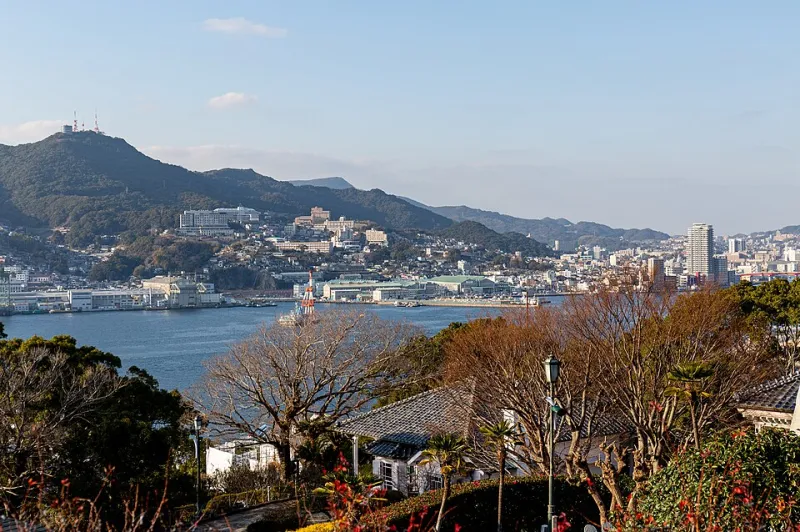
It probably helps that they landed in Nagasaki. This is a city with a long, layered relationship with illumination — from the lantern festivals that light up Chinatown every February to the soft glow that residents say seems to settle differently here than anywhere else in Japan. Inasayama, the mountain that watches over it all, has its own reputation as a place where perception shifts. Artists have been climbing it for inspiration for generations.
So when a handful of musicians with color-hearing started gravitating toward each other in Nagasaki's small but surprisingly adventurous experimental music scene, the environment was already primed. The city didn't just tolerate the idea of music as a visual experience. It kind of expected it.
"Nagasaki has always been a port," says Daichi Ushijima, a composer and electronic musician who works alongside Morishita on collaborative performance projects. "Things come in from outside and get remixed here. That's just the culture. So when we started saying, 'what if the concert is also a light installation,' nobody looked at us like we were crazy."
What Synesthesia Actually Sounds Like — or Looks Like
For American audiences who might be encountering the concept for the first time, it's worth slowing down here. Synesthesia isn't a disorder. It's not a hallucination. It's more like a cross-wiring in the sensory-processing parts of the brain that causes one type of input — sound, in this case — to automatically activate another sensory channel, usually color or spatial perception.
Researchers estimate somewhere between one and four percent of the population has some form of it. Famous synesthetes have included Wassily Kandinsky, Duke Ellington, and Pharrell Williams. What makes the Nagasaki group interesting isn't just that several of them have it — it's that they've turned it into a compositional system.
Morishita, for instance, has spent years mapping her own color responses to specific pitches, timbres, and rhythmic patterns. A low cello note is almost always a dark, bruised violet for her. Rapid high-pitched percussion comes in as scattered gold flecks. Silence, she says, is a very particular shade of gray-blue — not nothing, but a color with its own weight.
Using that internal map, she composes music the way a painter might plan a canvas. The emotional arc of a piece is also a color arc. Tension is built not just through dissonance but through clashing hues she can hear clashing in her head before anyone else can perceive a problem.
"I think of it as having access to a second score," she explains. "One that only I can read until I figure out how to show it to everyone else."
The Performance as Translation
Showing it to everyone else is where things get genuinely exciting — and technically complex.
The group's live performances, which have been staged in intimate venues around Nagasaki and at a handful of festivals in Kyushu, use custom lighting rigs programmed to respond to MIDI data generated by the musicians in real time. As the music unfolds, the room changes color. Not in a vague, mood-lighting way — in a precise, compositionally intentional way that mirrors what the composers are actually experiencing internally.
The goal, Ushijima explains, isn't to tell the audience what to feel. It's to give them a window into a perceptual experience that most people never access. "We're not saying, 'this note means blue.' We're saying, 'this is what we see when we hear this note. Come look through our eyes for an hour.'"
For American concertgoers used to either pure audio experiences or the kind of bombastic light shows that come with stadium tours, the effect is reportedly disorienting in the best possible way — intimate, cerebral, and oddly moving.
Breaking With Western Conventions
There's also something quietly radical happening here in terms of music theory. Western classical and popular music traditions have spent centuries treating sound and vision as fundamentally separate domains. You hear music. You watch a performance. The two might be paired, but they're not fused.
The Nagasaki synesthete composers are working in a tradition that has older roots in Japan — particularly in the kind of integrated sensory experience that runs through Noh theater and certain Buddhist ritual practices — but they're combining it with contemporary electronic composition, free improvisation, and a frankly global appetite for influence. Morishita cites Meredith Monk and Pauline Oliveros alongside Tōru Takemitsu. Ushijima listens to a lot of Brian Eno.
The result is music that doesn't quite fit any existing box, which makes it a tough sell for mainstream venues but an increasingly compelling draw for the experimental music festivals and art spaces that are always hunting for something genuinely new.
Why International Audiences Are Starting to Pay Attention
Word has been spreading, slowly but persistently, through the international experimental music networks that connect adventurous listeners across continents. A short documentary filmed at one of the group's Nagasaki performances circulated widely enough in certain corners of the internet to generate emails from curators in Berlin, Brooklyn, and Melbourne.
For now, the work remains rooted in Nagasaki. The city's scale — small enough to feel like a community, large enough to have real cultural infrastructure — suits the project. And there's something about the specific light quality here, the way the harbor reflects and the mountain looms, that feels inseparable from what the music is reaching for.
If you're the kind of traveler who plans trips around experiences you genuinely can't get anywhere else, this is worth putting on your radar. Performances are infrequent and usually announced through local arts channels with minimal lead time — part of the point is that they feel like events, not products. But catching one, by most accounts, is the kind of thing you'll be describing to people for years.
Some music you hear. Some music you see. In Nagasaki, right now, a small group of artists is making the kind that does both at once — and the rest of the world is just beginning to look.