What You Don't Hear Is the Point: Nagasaki's Sound Artists Are Composing With Emptiness
There's a moment—maybe you've felt it—when a song ends and the silence after it lands harder than any note that came before. That gap, that held breath, is exactly where a quiet revolution in Japanese sound art is being built.
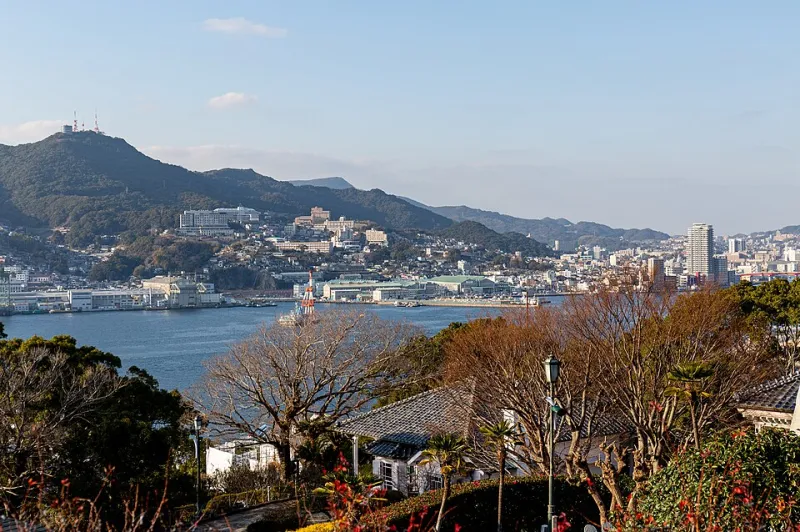
Nagasaki isn't the first city that comes to mind when you think about experimental music. That honor usually goes to Tokyo, Osaka, maybe Kyoto if you're feeling generous. But in the repurposed warehouses, converted harbor-side studios, and mountain-adjacent listening rooms scattered across the Inasayama region, something genuinely new is happening. A loose collective of composers, field recordists, and sound designers are making work that treats absence as the main ingredient.
And they're not apologizing for it.
Turning Down the Volume on Everything
To understand what these artists are reacting against, it helps to think about what most of us are swimming in every day. Streaming algorithms reward density. Playlists are engineered to keep you from ever sitting with a moment too long. Even ambient music—the genre most associated with calm—has gotten louder, more layered, more insistent about making you feel something on a schedule.
Nagasaki-based sound artist Haruki Sone has a different approach. His recent project, recorded in the predawn hours on the slopes above the city, consists almost entirely of the sound of fog moving through pine branches, interrupted by a single struck bowl roughly every four minutes. That's it. The whole thing runs forty-seven minutes.
"I wanted to make something that required the listener to do the work," Sone explained during a conversation at his studio, a converted storage space that smells faintly of cedar and old paper. "Most music pushes meaning at you. I wanted to create a space where meaning could arrive on its own."
It sounds like a provocation. It is, a little. But it's also, once you give it a real chance, quietly devastating.
Field Recordings as Raw Material
One of the defining tools in this scene is the field recording—capturing raw sound from the environment and using it compositionally, either untouched or as the foundation for something more structured. Nagasaki happens to be an extraordinary place to do this kind of work.
The city carries layers. Harbor sounds, temple bells, the specific acoustic character of a port city that has been rebuilt and reimagined across centuries. The Inasayama mountain itself contributes its own sonic texture: wind patterns that shift with altitude, the particular resonance of stone pathways, the way rain sounds different up there than it does at sea level.
Producer and sound designer Yuki Tanabe has spent the past three years building an archive of Nagasaki soundscapes that she now uses as the raw material for her compositions. She describes her process as "subtractive"—starting with hours of recorded material and removing almost everything until only the essential remains.
"Americans sometimes hear my work and ask where the music is," she said with a laugh. "I tell them: the music is in the decision about what to leave out."
That philosophy connects directly to Japanese aesthetic traditions—wabi-sabi's embrace of incompleteness, ma's celebration of the meaningful pause—but Tanabe is careful not to let the work become a cultural artifact. She's making something contemporary, not nostalgic. The tension between those two impulses is part of what gives the music its edge.
The Listening Room Phenomenon
One of the more surprising developments in Nagasaki's sound art scene is the emergence of dedicated listening spaces—intimate venues designed specifically for deep, focused audio experiences. Think of them as the opposite of a club. No drinks menu, no conversation, no phones. Just chairs, a high-quality sound system, and the expectation that you will actually pay attention.
These spaces have been quietly filling up, which says something interesting about what people are hungry for right now. In a cultural moment defined by distraction, the idea of sitting in a room and genuinely listening to something—without multitasking, without scrolling, without half-checking out—has become almost radical.
The listening room run by sound collective Shizukesa (roughly translatable as "quietude") seats twelve people and hosts events twice a month. Tickets, when they're available, sell out in hours. The programming ranges from solo drone compositions to carefully arranged field recording sets to live performances where the artists work in near-total darkness.
"We wanted to remove the visual spectacle," said collective member Ren Fujishiro. "When you can't watch someone perform, you actually hear differently. You become more attentive. More present."
For American visitors to Nagasaki, stumbling into one of these events can feel like discovering something that shouldn't exist—too quiet, too patient, too willing to make you wait. But that discomfort tends to dissolve somewhere around the twenty-minute mark, replaced by something harder to name. A kind of grateful stillness.
Why This Matters Beyond Japan
It would be easy to frame Nagasaki's avant-garde sound scene as a purely local phenomenon, interesting but contained. That framing would be wrong.
The questions these artists are asking—about attention, about what music owes a listener, about whether maximalism has gone too far—are questions with urgent relevance everywhere. American music culture in particular has spent the last decade in a kind of sonic arms race, where more is always assumed to be better. More drops, more layers, more stimulation per second.
What's happening in Nagasaki is a genuine counterargument. Not a nostalgic retreat into the past, but a forward-looking experiment in what listening could become if we were willing to slow down and meet it halfway.
Sone put it simply, almost offhandedly, near the end of our conversation: "The silence isn't empty. It's just waiting for you to notice what's already there."
That's not a bad philosophy for music. It might not be a bad philosophy for anything.
How to Find This Scene
If you're planning a trip to Nagasaki and want to tap into what's happening here, the best entry point is the city's independent venue circuit, particularly spaces clustered near the harbor and in the quieter residential neighborhoods climbing toward Inasayama. Social media accounts for collectives like Shizukesa post event listings, though often in Japanese—a translation app will get you most of the way there.
The Inasayama area itself rewards a slow visit. Bring headphones and your own patience. The mountain has a way of doing some of the compositional work for you.