Lit From Within: The Ancient Nagasaki Light Practices That Researchers Are Finally Studying
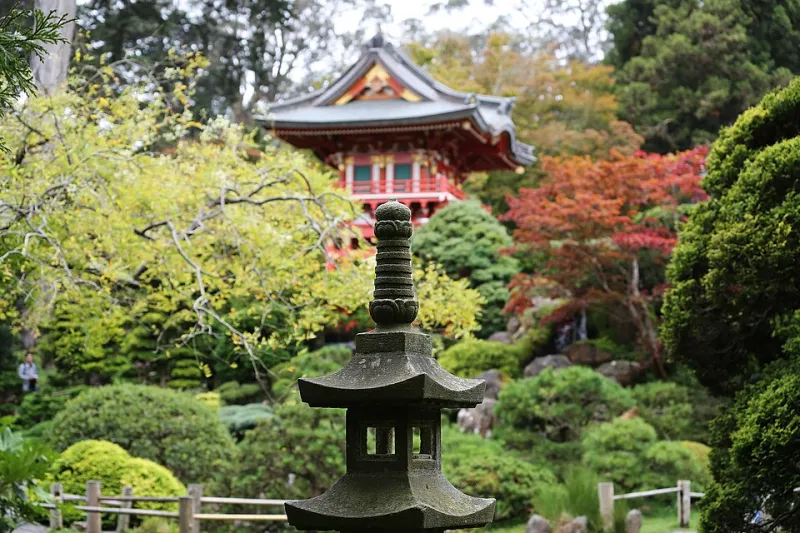
Photo: Tobias Kleinlercher / Wikipedia, CC BY-SA 3.0, via Wikimedia Commons
When Dr. Priya Nair first visited Nagasaki, she wasn't there as a researcher. She was there as a person who hadn't slept properly in two years. A circadian rhythm specialist at a university in Boston, she'd spent the better part of a decade studying how light affects the human body—and had somehow, in the process, forgotten to apply any of it to herself.
She'd come to Japan on a personal trip, and a colleague had nudged her toward Nagasaki rather than the usual Tokyo-Kyoto circuit. What she found on the slopes of Inasayama and in the lantern-lit courtyards of the city's older temples stopped her cold.
"I walked through a temple garden at dusk and felt my nervous system just... release," she says. "And I remember thinking: this is what I've been writing about in papers for ten years. Someone here figured this out a very long time ago."
What Light Does to a Body
The science isn't complicated, even if the applications are. Human beings evolved with a fairly simple expectation: bright, blue-spectrum light during the day, warm, dim light as evening approaches, darkness at night. This cycle regulates cortisol, melatonin, body temperature, and a cascade of other biological processes. Disrupt it—with overhead fluorescent lighting, late-night screen time, or the relentless artificial brightness of modern cities—and the body starts to malfunction in subtle but significant ways. Poor sleep, low mood, impaired immune response, and the cluster of symptoms associated with Seasonal Affective Disorder are all, in part, light problems.
Nagasaki's traditional relationship with light, it turns out, is almost textbook circadian hygiene—though no one here would have used that phrase until recently.
The Lantern Logic
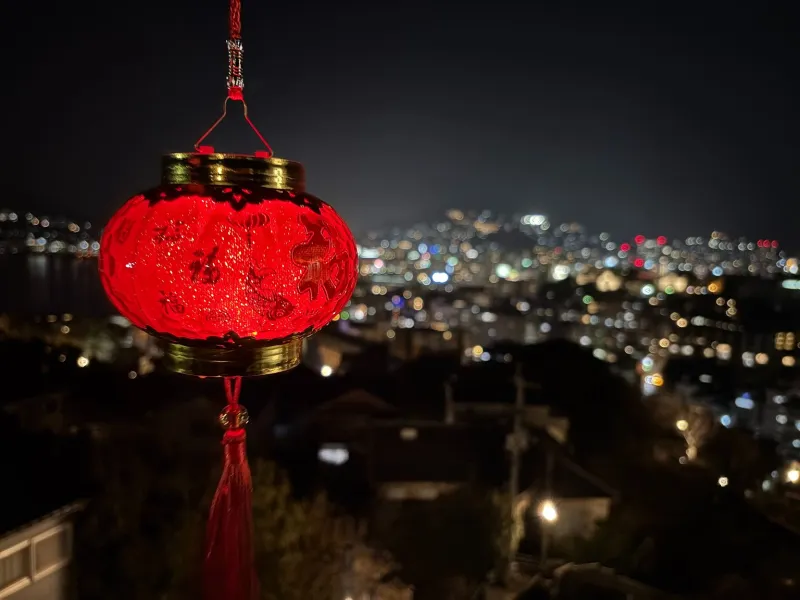
The city's famous lantern festivals aren't just beautiful. The specific quality of light produced by paper lanterns—warm, amber-toned, low-intensity, and flickering—sits almost perfectly in the spectrum that researchers associate with healthy evening wind-down. It's the opposite of the blue-white LED floodlights that dominate most modern public spaces, including the majority of American cities.
Local practitioners have understood this intuitively for generations, even without the vocabulary of photobiology. Takeshi Inoue, a Nagasaki-based wellness guide who leads evening walks through the city's lantern districts, explains it simply: "Our grandparents knew that the light in the evening should feel like a breath out. Not a breath in."
That metaphor turns out to be neurologically accurate. Warm, low-intensity light in the evening hours triggers a parasympathetic response—the body's rest-and-digest mode—while blue-spectrum bright light keeps the sympathetic nervous system engaged. What Inoue's grandparents were doing with paper and flame, modern sleep clinics are now trying to replicate with expensive therapy lamps and blue-light-blocking glasses.
Temple Gardens as Light Architecture
Beyond the festivals, Nagasaki's historic temple gardens reveal a sophisticated—if unspoken—understanding of how light moves through space and time. The placement of stone lanterns, the orientation of reflection pools, the careful selection of tree species that filter afternoon light in specific ways: these aren't just aesthetic choices. They create environments where the quality of light changes predictably across the day, guiding visitors through a kind of involuntary light therapy.
Dr. Nair has been collaborating with a team at a Japanese university to document these design principles, with an eye toward incorporating them into hospital and therapeutic space design back in the States. "We're basically reverse-engineering what these garden designers knew," she says. "The math is all there. They just expressed it in stone and water instead of equations."
Americans Making the Trip
Word has gotten out, at least among the wellness-minded. Nagasaki has seen a modest but noticeable uptick in American visitors who are coming specifically for light-based experiences—the lantern walks, the temple garden meditations at dusk, the sunrise practices on Inasayama that local guides have offered for decades without ever marketing them to foreign visitors.
Sarah Okonkwo, a therapist from Chicago who specializes in seasonal depression, brought a small group of clients to Nagasaki last October. She'd spent two years researching alternatives to light box therapy, which works for some patients but leaves others cold—literally and figuratively. What she found in Nagasaki was something her clients responded to on a level that clinical tools hadn't touched.
"There's a difference between sitting in front of a lamp in your apartment and walking through a lit garden at dusk with the smell of incense in the air," she says. "The science might be similar. The experience is completely different. And for some people, the experience is what actually heals them."
Several dermatologists and integrative medicine practitioners in the US have begun recommending short-term travel to Nagasaki as a complement to conventional SAD treatment—not as a replacement, but as a way of resetting a patient's relationship with light in an environment specifically designed for it.
The Glow at the Top of the Mountain
On Inasayama itself, the light has a quality that visitors struggle to describe and researchers are still trying to quantify. At altitude, with the harbor below and the city's lantern glow visible on clear evenings, the interplay of natural and human-made light creates an environment that feels, to most people who experience it, profoundly calming.
That feeling isn't imaginary, and it isn't just tourism. It's the product of centuries of accumulated wisdom about how human beings relate to illumination—wisdom that Western science is, slowly and somewhat sheepishly, beginning to validate.
Dr. Nair is planning a return trip next winter. This time, she's bringing colleagues. And a notebook. And, she admits with a laugh, maybe a little less skepticism than she arrived with the first time.