What Nagasaki Got Wrong (and Right) About Cities — and What American Planners Refuse to Learn
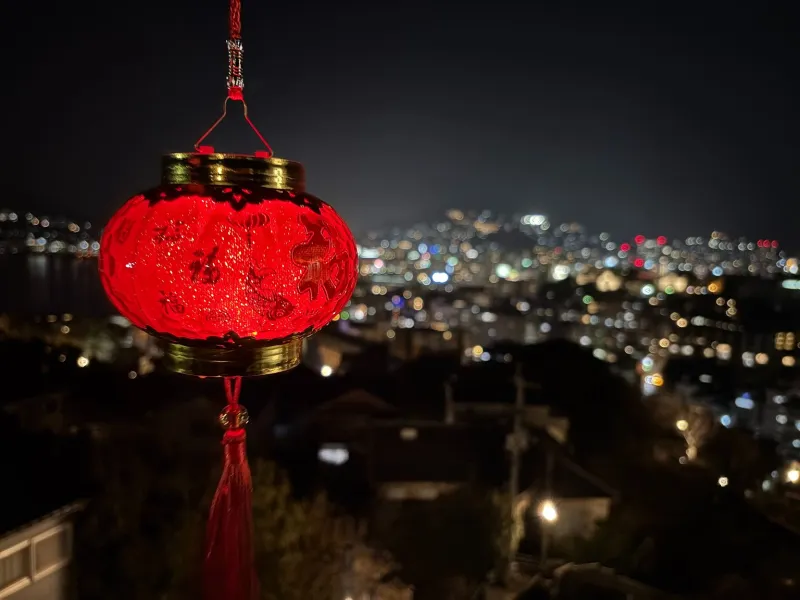
Photo: Nagasaki hillside neighborhood narrow streets lanterns evening, via storage.googleapis.com
Somewhere in the gap between what a city is designed to feel like and what it actually feels like, there's a lesson that most American urban planners have been avoiding for decades.
Nagasaki, almost by accident, has been teaching it.
This isn't a city that anyone designed to be beautiful or livable or psychologically nourishing. The neighborhoods that climb the slopes of Inasayama grew the way they grew because of geography, history, and the particular stubbornness of people who decided to rebuild after catastrophe without waiting for a master plan. The result is something that no amount of intentional design seems able to replicate: a city that actually feels good to be in.
The Problem With Perfect
American urban design has a perfectionism problem. From the High Line in Manhattan to the Salesforce Transit Center in San Francisco to the endless parade of "innovation districts" and "creative corridors" that have been rolled out across mid-sized cities over the past two decades, the dominant approach to urban space in America is essentially cinematic: design an environment that looks great in a rendering, optimize it for the Instagram moment, and assume that livability will follow.
It usually doesn't. Or rather, it does for a while — until the novelty wears off and people start to notice that something is missing. The spaces feel curated rather than inhabited. They're designed for visitors rather than residents. The edges are too clean. There's nowhere to lean.
Urban theorists have been circling this problem for years, invoking Jane Jacobs, Christopher Alexander, and the concept of "third places" with increasing urgency. But the proposed solutions tend to stay within the same design-forward paradigm that created the problem: more thoughtful curation, better programming, smarter technology integration.
Nagasaki suggests a different answer: less intention, more accident. Less design, more time.
The Neighborhoods That Weren't Planned
The hillside districts around Inasayama are, by conventional planning standards, a mess. Streets that were never intended to be streets wind between houses that were never intended to be next to each other. Staircases appear without warning. Buildings from different eras sit in uncomfortable proximity. There are no coherent sight lines, no unified aesthetic, no discernible logic to the way the neighborhood has accumulated over time.
And yet these neighborhoods are, by almost any experiential measure, extraordinary places to be.
Part of it is the light. Because the streets follow the natural contours of the hillside rather than a grid, light arrives at unexpected angles throughout the day, creating pockets of warmth and shadow that shift with the hours. Lanterns hung at different heights by different residents over different decades create an illumination pattern that no lighting designer could have engineered — partly because it wasn't engineered at all, and the imprecision is exactly what makes it feel alive.
Part of it is the scale. Buildings in these neighborhoods are sized to human bodies because they were built by and for human bodies, not for the visual impact of aerial photography or the efficiency of bulk zoning. Doorways are low. Alleys are narrow. You are constantly aware of your own presence in space, which turns out to be a surprisingly rare and valuable sensation in a built environment.
And part of it is the layering — the way each decade has left its mark without erasing the one before it. A wall that has been repaired seven times in seven different ways tells a story. A staircase worn smooth by a century of feet carries a kind of meaning that no newly poured concrete can approximate.
Authenticity Isn't a Design Feature
Here's the uncomfortable truth that Nagasaki's organic neighborhoods make visible: authenticity cannot be designed. It can only be accumulated.
This is a genuinely difficult proposition for an industry built on the premise that the right design choices produce the right outcomes. And it's not an argument against design — good design matters enormously, and Nagasaki has plenty of it. But there's a category of quality that design cannot manufacture, and American cities keep trying to manufacture it anyway, wondering why the results feel hollow.
The Inasayama neighborhoods work because they were built by people solving real problems with available materials under actual constraints, not by people trying to evoke the feeling of a neighborhood. The difference is legible to any human nervous system, even if it's hard to articulate.
Some urban researchers are starting to put language to it. The concept of "psychologically restorative environments" — spaces that reduce stress, restore attention, and promote a sense of wellbeing — has been gaining traction in environmental psychology, and the research consistently points toward the same qualities: moderate complexity, natural variation, legible history, human scale. These are precisely the qualities that Nagasaki's unplanned neighborhoods have in abundance and that most American urban developments struggle to achieve.
The Wellness Argument
For American travelers who visit Nagasaki expecting a tourist attraction and end up spending hours just walking the hillside streets, the experience is often described in terms that sound more therapeutic than aesthetic.
"I kept stopping and not knowing why," said one visitor from Denver who spent a week in the Inasayama area. "There was just something about the way the light was hitting a wall, or the way a staircase turned — I'd stop and feel this weird sense of calm. It happened over and over."
This isn't mysticism. It's what happens when a built environment has been shaped by human needs over a long enough period that it has, in a sense, learned how to accommodate human beings. The city has been stress-tested by actual life, and what survived is what works.
American cities, many of them relatively young and heavily planned, haven't had time to go through that process. And the planning paradigm that dominates them tends to short-circuit it — optimizing for efficiency and visual coherence in ways that inadvertently strip out the complexity and imperfection that make spaces feel worth inhabiting.
What American Planners Could Actually Do
None of this means American cities should stop planning or designing. It means they should plan and design differently — with more humility about what design can accomplish, and more respect for the value of what they're replacing when they clear a site and start fresh.
Some of the most interesting urban work happening in America right now takes this approach: preserving existing buildings even when they're inconvenient, allowing uses to mix in ways that don't fit neatly into zoning categories, accepting the aesthetic friction that comes from letting different eras coexist. It's not glamorous work. It doesn't photograph well in a presentation deck.
But walk through the right neighborhoods in Nagasaki — the ones that weren't rebuilt on a grid, that grew up the mountain the way they grew up the mountain — and you get a visceral sense of what that work is trying to achieve.
The light isn't planned. The warmth isn't engineered. The feeling of being genuinely welcomed by a place rather than processed by it — that's what's at stake.
And it turns out Nagasaki figured out how to get there mostly by not trying too hard. Which is, if you think about it, the most useful design lesson of all.