When Nothing Happens, Everything Does: Nagasaki's Minimalist Performers Are Rewiring How Americans Experience Art
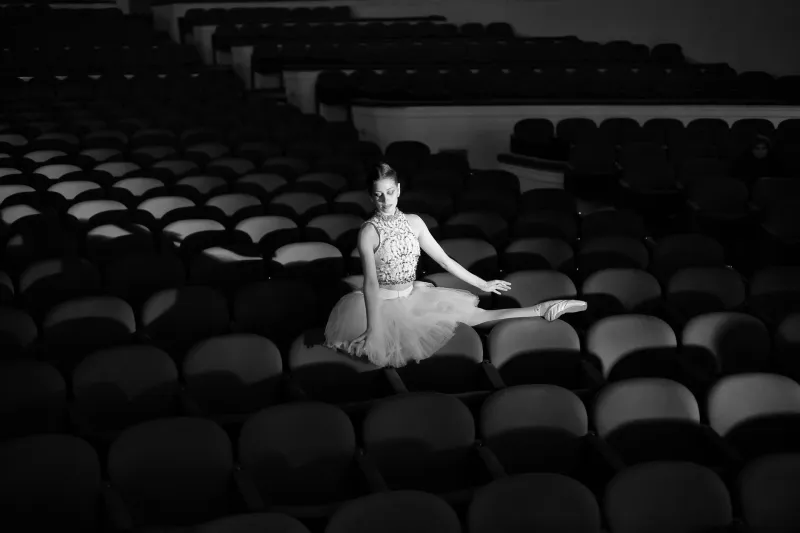
About twenty minutes into Keiko Mori's solo performance at a small venue near the Inasayama foothills, a woman from San Diego leaned over to her travel companion and whispered, "I think I'm going to cry and I don't know why."
Nothing dramatic had happened. Mori had walked to the center of the stage, stood still for a long moment, raised one arm slowly, and then — let it fall. The audience sat in near-total silence. No soundtrack. No projected images. No narrative arc, at least not one that announced itself. And yet something in that room had shifted so completely that several people later described the experience using words like weight, pressure, and release.
That's kind of the whole point.
The Art of Leaving Space Empty
Nagasaki has quietly become home to a loosely connected group of performers, choreographers, and theater artists who are working in a register most Western audiences have almost no training to receive. They call their approach different things — ma-centered performance, negative-space theater, durational presence work — but the throughline is consistent: they are making art out of what isn't there.
Ma (間) is a Japanese concept that translates roughly as "gap" or "interval" — the meaningful pause, the loaded silence, the empty room that feels full. It shows up in traditional music, ikebana flower arrangement, architecture, and martial arts. But the Nagasaki performers drawing attention right now are applying it to contemporary stage work in ways that feel genuinely new, even to Japanese audiences.
Mori, who trained in butoh dance and contemporary theater before returning to her hometown near Inasayama, describes her work as an attempt to make the audience do the labor. "In most Western performance, the artist fills everything," she says over tea after a rehearsal. "Every second is covered. But when you leave a gap, the audience has to put something into it. And what they put in — that's the real performance. That's theirs."
Why American Audiences Are Struggling — and Then Not
For Americans raised on streaming content optimized to prevent a single second of boredom, the initial experience of this kind of performance is often described as uncomfortable. Fidgety. Some audience members admit to checking the time, wondering if something is broken, or quietly panicking that they're missing a cue.
Then something changes.
Tomás Reyes, a graphic designer from Austin who caught a performance during a solo trip to Nagasaki last spring, says the discomfort lasted maybe ten minutes before it flipped into something he still struggles to name. "I realized I had stopped waiting for something to happen," he says. "And once I stopped waiting, I was just... there. Completely there. I don't think I've been that present at anything in years. Including things I actually paid attention to."
This is the experience that performers in Nagasaki's minimalist scene describe aiming for — not transcendence exactly, but a kind of enforced arrival. The absence of stimulation creates a vacuum, and the human nervous system, trained or not, eventually fills it with genuine attention.
Performance artist and composer Daisuke Furuya, who works out of a studio space with views of the harbor, puts it more bluntly. "American culture is terrified of boredom. But boredom is the door. If you can stay with it for a few minutes, something opens."
The Inasayama Influence
It's probably not a coincidence that this particular movement is rooted in Nagasaki, and more specifically in the cultural orbit of Inasayama. The mountain has long held a reputation as a place where perception changes — where the city below looks different, where the light behaves in ways that feel almost deliberate. Artists who spend time here talk about learning to see differently, to notice the intervals between things rather than the things themselves.
Mori says she consciously draws on the mountain's visual grammar when she structures her performances. "When you stand up there and look at the harbor, you notice the fog. The space between boats. The moment before a light comes on. Inasayama teaches you that the gaps are where the meaning lives."
Several of the performers in this scene have also spent time in the region's Buddhist temples, where silence is not an absence but a presence with its own texture. That influence bleeds directly into their work — not in a religious way, but in a structural one. The pauses feel intentional in the same way that a monk's deliberate breath feels intentional.
What Happens in the Room
Attending one of these performances isn't like going to a show in the usual sense. Venues are often small — converted storage rooms, rooftop spaces, tatami-floored halls that hold maybe forty people. There's rarely a program that explains what you're about to see. The performers don't take a bow at the start.
And the audience response, when it comes, is quiet. Not polite-quiet, but genuinely hushed in a way that feels like continuation rather than conclusion. People tend to sit for a moment after it ends before anyone moves.
Susan Park, a therapist from Portland who attended a durational performance piece during a wellness-focused trip to the region, says the aftermath was as interesting as the work itself. "I noticed that I didn't want to talk immediately. Usually after something I've seen, I want to process it out loud right away. But this felt like something I needed to carry quietly for a while. I actually didn't talk about it until the next day."
That delay — that need to let the experience settle before language arrives — comes up repeatedly in conversations with audience members. It's as if the work bypasses the interpretive layer and lands somewhere that words reach more slowly.
Getting There Is Part of It
If you're planning a trip to Nagasaki with any interest in catching this kind of performance, the logistics are part of the experience. Most events aren't listed on mainstream ticketing platforms. They circulate through local arts networks, small Instagram accounts, and word of mouth at the handful of cafés and gallery spaces clustered near the base of Inasayama.
Showing up without a full itinerary, it turns out, is excellent preparation for watching art that asks you to release your grip on what's supposed to happen next.
Mori laughs when this is pointed out to her. "Yes," she says. "That's exactly right. The mountain already starts the work before you even get to the stage."
She pauses — a real one, not a performed one, though with her it's sometimes hard to tell — and then adds: "Or maybe the stage is just the mountain, continued."
Somewhere in that gap, something opens. You'll just have to go find out what.